

Why Hospital Security Guards Are Essential to Modern Healthcare
hospital security guards are trained professionals who keep patients, staff, and visitors safe inside one of the most complex and high-risk environments imaginable.
Here is a quick overview of what hospital security guards do and why they matter:
| Role | Key Responsibilities |
|---|---|
| Patient and visitor safety | Greeting visitors, managing access, escorting individuals |
| Emergency response | Lockdowns, evacuations, crisis intervention |
| Violence prevention | De-escalation, incident management, visible deterrence |
| Property security | Patrol, surveillance monitoring, parking control |
| Staff support | Assisting medical teams, restraint support, incident reporting |
Healthcare facilities run 24 hours a day, 7 days a week. They serve people at their most vulnerable. And they face a level of risk that most workplaces never see.
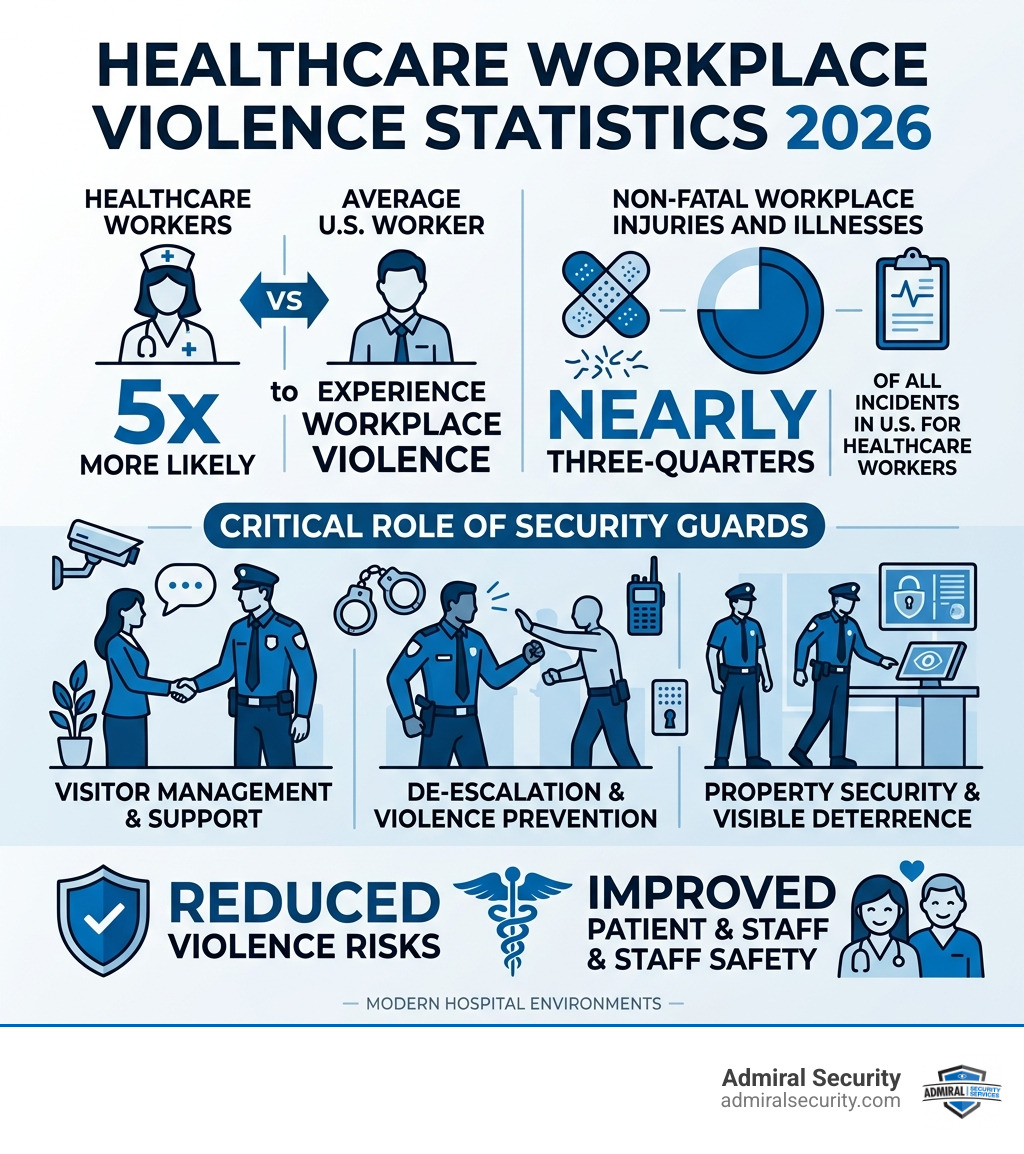
The numbers tell a stark story. American healthcare workers are five times more likely to experience workplace violence than the average U.S. employee. Healthcare workers account for nearly three-quarters of all non-fatal workplace injuries and illnesses in the country, according to OSHA reports.
That is not a minor staffing footnote. That is a crisis.
And yet, the role of a hospital security guard goes far beyond stopping violence. These officers are often the first face a frightened visitor sees when they walk through the door. They set the tone for the entire patient experience, from the parking lot to the patient ward.
This guide covers everything you need to know about hospital security guards, including their daily duties, required training, career paths, salary ranges, and the unique challenges they face in 2026.
Basic hospital security guards glossary:
The Critical Role of Hospital Security Guards in 2026
In my experience, the modern hospital is much more than a medical facility. It is a microcosm of society, operating on the frontlines of emotional distress, mental health crises, and emergency trauma. Because of this, hospital security guards act as an integral part of the patient care team. I believe that a great officer does not just watch a door. They contribute to the healing process by creating a stable, secure environment where doctors and nurses can focus on medicine without fear.
The role requires a unique blend of empathy and vigilance. In cities like Houston, where medical complexes are vast and busy, having specialized personnel is not just a luxury. It is a necessity for maintaining order. You can learn more about Why Specialized Hospital Security Guards in Houston Are a Must-Have to understand how these roles are tailored to high-traffic urban medical centers.
The Daily Impact of Hospital Security Guards
Every day, these officers perform a variety of tasks that keep the gears of the hospital turning. They are the ones who greet you when you are lost, ensure that only authorized people enter sensitive wards, and provide a visible presence that discourages criminal activity.
Their daily impact includes:
- Visitor Assistance: Providing directions and helping families navigate the maze of hospital corridors.
- Rule Enforcement: Ensuring that hospital policies, such as visiting hours and smoking bans, are followed consistently.
- Visible Deterrence: Simply being present in a professional uniform can prevent many incidents before they even start.
Maintaining these Professional Standards for Hospital Security Guards ensures that the facility remains a safe haven for everyone involved.
Balancing Safety and Compassion
One of the hardest parts of my job is teaching new officers that they aren’t just there to enforce rules. They are there to support a therapeutic presence. Hospitals are high-stress environments. Patients may be scared, and family members may be grieving or angry.
A security officer must use high levels of emotional intelligence to read a situation. Is a person being aggressive because they are a threat, or are they just overwhelmed by a medical diagnosis? By leading with customer service and empathy, hospital security guards can diffuse many volatile situations without ever needing to use physical intervention.
Essential Qualifications and Training for Healthcare Safety
Becoming a hospital security guard is not something that happens overnight. It requires a specific set of credentials and a clean history. In 2026, the industry standard involves rigorous screening to ensure that only the most reliable individuals are placed in these sensitive roles. This often begins with The Essential Guide to Vetting Your Security Personnel.
Specialized Training for Hospital Security Guards
General security training is just the baseline. To work in a hospital, I find that officers need specialized education that covers:
- De-escalation: Techniques to calmly manage behavioral crises and reduce tension.
- CPR and First Aid: While they aren’t doctors, being able to provide immediate life-saving support is vital.
- Crisis Intervention: Learning how to handle individuals experiencing mental health episodes.
- IAHSS Certification: The International Association for Healthcare Security and Safety (IAHSS) offers certifications that are highly regarded in the medical field.
Physical and Professional Requirements
The job is physically demanding. I have seen officers who need to stand for an entire eight-hour shift or walk several miles during their patrols. Requirements typically include:
- Physical Fitness: The ability to lift objects (sometimes up to 80 or 100 lbs) and respond quickly to emergencies.
- Communication Skills: Proficiency in English is essential for reporting incidents and coordinating with medical staff.
- HIPAA Compliance: Guards must understand patient privacy laws. They often see sensitive information and must keep it confidential.
Ensuring you are Hiring Vetted Security Officers who meet these physical and professional bars is the first step in building a reliable team.
Daily Duties and Specialized Equipment
The tools of the trade have changed significantly over the years. We no longer rely solely on a flashlight and a notepad. Modern technology allows us to be proactive rather than reactive.

Security Tools and Technology
Today’s hospital security guards use a suite of tools to maintain safety:
- Body-Worn Cameras: These provide an accurate account of any incidents, which is crucial for documentation and liability.
- Radios and Smartphones: Fast communication is the difference between a controlled situation and a disaster.
- Digital Reporting Software: Gone are the days of messy handwriting. Officers now use apps to log patrols and report hazards in real-time.
| Feature | Unarmed Guard | Mobile Patrol |
|---|---|---|
| Primary Focus | Static post or foot patrol | Large area coverage via vehicle |
| Best For | Front desks, ICU, ER | Parking lots, multi-building campuses |
| Key Equipment | Radio, smartphone, de-escalation skills | Vehicle, GPS, spotlights |
Operational Oversight and Facility Policing
Hospital security is also about the “behind the scenes” work that keeps the facility running. This includes security risk management for specific areas:
- Morgue Procedures: Managing the release of bodies to funeral homes and ensuring proper documentation.
- Parking Management: Controlling traffic flow and assisting visitors with car issues like dead batteries.
- Helicopter Pad Escorts: Meeting medical flight crews to ensure a clear path for trauma patients.
- Facility Checks: Walking the grounds to look for fire hazards, unlocked doors, or lighting issues.
Navigating the Challenges of Workplace Violence and Mental Health
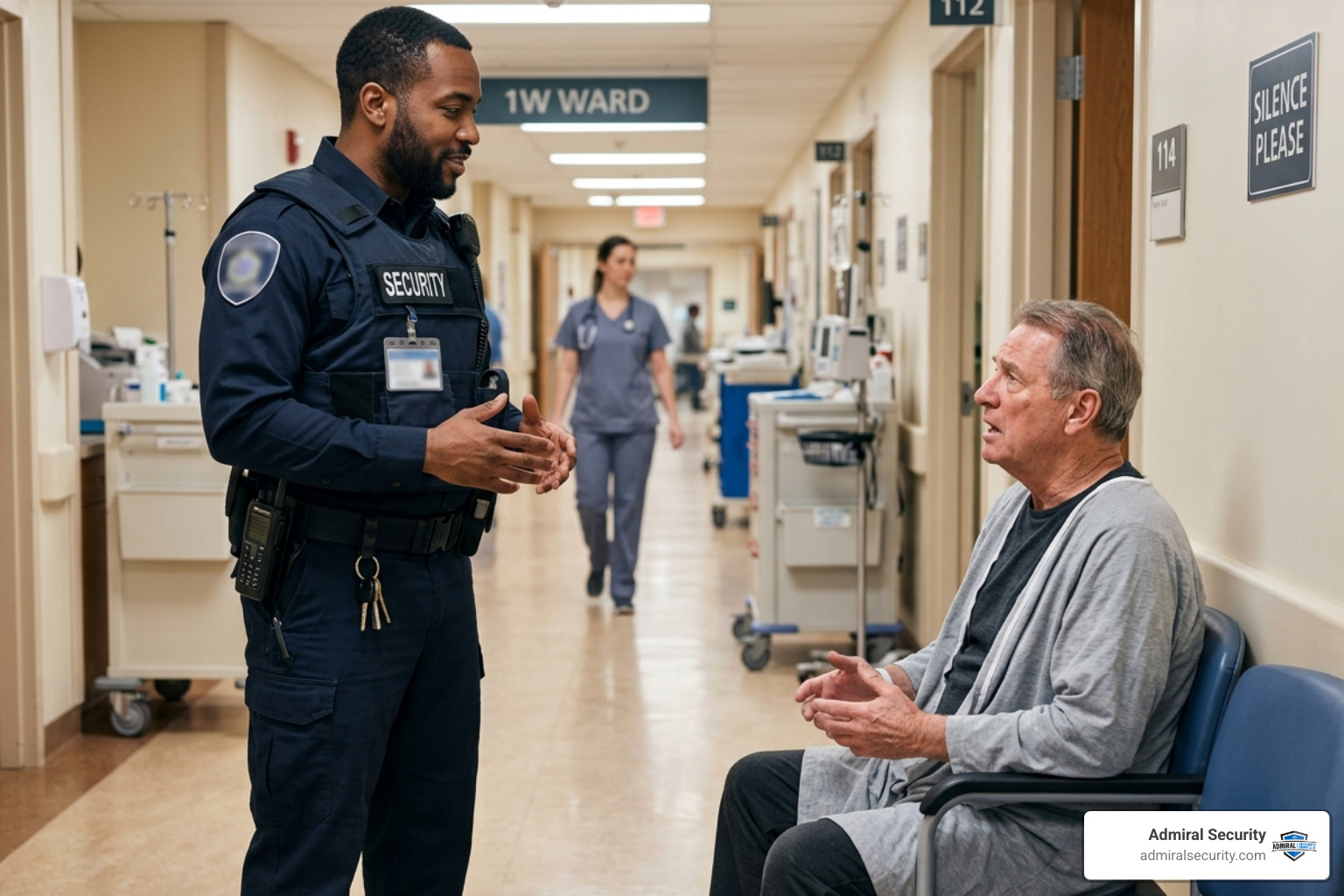
The rise in workplace violence is the most significant challenge we face in 2026. Hospitals are open to the public, which makes them vulnerable to external threats. However, many incidents actually involve patients or visitors who are under extreme stress.
Safeguarding Vulnerable Populations
We have to be particularly vigilant in areas involving children and infants. hospital security guards are trained to prevent infant abductions by monitoring maternity ward exits and verifying identities. We also work closely with “forensic patients”, individuals who are in police custody but require medical treatment. This requires a high level of coordination with local law enforcement.
For those interested in these high-stakes roles, you can explore Specialized Training for High-Risk Healthcare Environments to see how we prepare our teams for these scenarios.
Managing High-Stress Incidents
When a “Code Silver” (active shooter or weapon) or other major emergency is called, security is the first line of defense.
- Lockdowns: Quickly securing all entrances and exits to keep a threat out or contained.
- Crowd Control: Managing the flow of people during a disaster or mass casualty event.
- Emergency Evacuations: Working with clinical staff to move patients safely if the building is compromised.
Career Path and Compensation in Healthcare Security
Many people ask me if you can make a real career out of being a hospital security guard. The answer is a resounding yes. It is a field with a lot of room for growth, especially for those who are willing to put in the work and get certified.
Factors Influencing Earnings
In 2026, salaries for hospital security officers generally range from $24,000 to $53,000 annually, with many averaging around $34,000 to $39,000. Factors that influence your pay include:
- Experience: Having a background in the military or law enforcement often leads to higher starting pay.
- Certifications: Earning an IAHSS Basic, Advanced, or Supervisory certification can lead to immediate raises.
- Location: Working in high-cost areas like Boston or Miami typically pays more than in smaller markets.
- Shift Differentials: Working the night shift or weekends often comes with extra “hazard” or “differential” pay.
You can find Top Rated 24 Hour Security Guards to Keep Your Property Safe who are often on the higher end of the pay scale due to their specialized skills.
Advancement Opportunities
The path from an entry-level officer to a leadership role is well-defined:
- Security Officer: The starting point for most careers.
- Shift Supervisor: Managing a team of officers during a specific shift.
- Operations Chief: Overseeing the daily security operations for the entire facility.
- Security Director: A high-level administrative role that works with hospital leadership on security risk management.
Frequently Asked Questions about Healthcare Security
What is the difference between hospital security and campus security?
While both involve patrolling large areas, hospital security is much more focused on clinical interaction. We deal with patients in medical or mental health crises, which requires knowledge of medical restraints and patient privacy (HIPAA) that a standard campus guard might not need.
Do hospital security officers need medical training?
They don’t need to be nurses, but they do need basic life-saving skills. Most hospitals require CPR and First Aid certification. They also need to understand how to assist medical staff during a “code” without getting in the way of the doctors.
How do security guards handle violent patients?
The first tool is always verbal de-escalation. We try to talk the person down and understand their needs. If that fails and there is a threat of harm, we use the minimum amount of force necessary to restrain the individual, often under the direct supervision of medical staff to ensure the patient remains safe.
Conclusion
At Admiral Security, we believe that the “Admiral Advantage” is what sets us apart in the healthcare field. We don’t just provide a body in a uniform; we provide an extension of the hospital’s own mission. By combining authenticity, logic, and empathy, our hospital security guards help create an environment where healing can happen.
Whether we are managing a busy ER in Richmond, VA, or securing a research facility in Bethesda, MD, our goal remains the same: to provide a sense of peace in a place that is often chaotic. We are proud to serve the healthcare heroes who keep our communities healthy.
If you are looking for a security partner that understands the unique pressures of the modern healthcare crisis, I invite you to Learn more about the Admiral Advantage. Together, we can make sure your facility remains a safe space for everyone who walks through your doors.