

How Security Guards for Retail Help Secure Luxury Stores
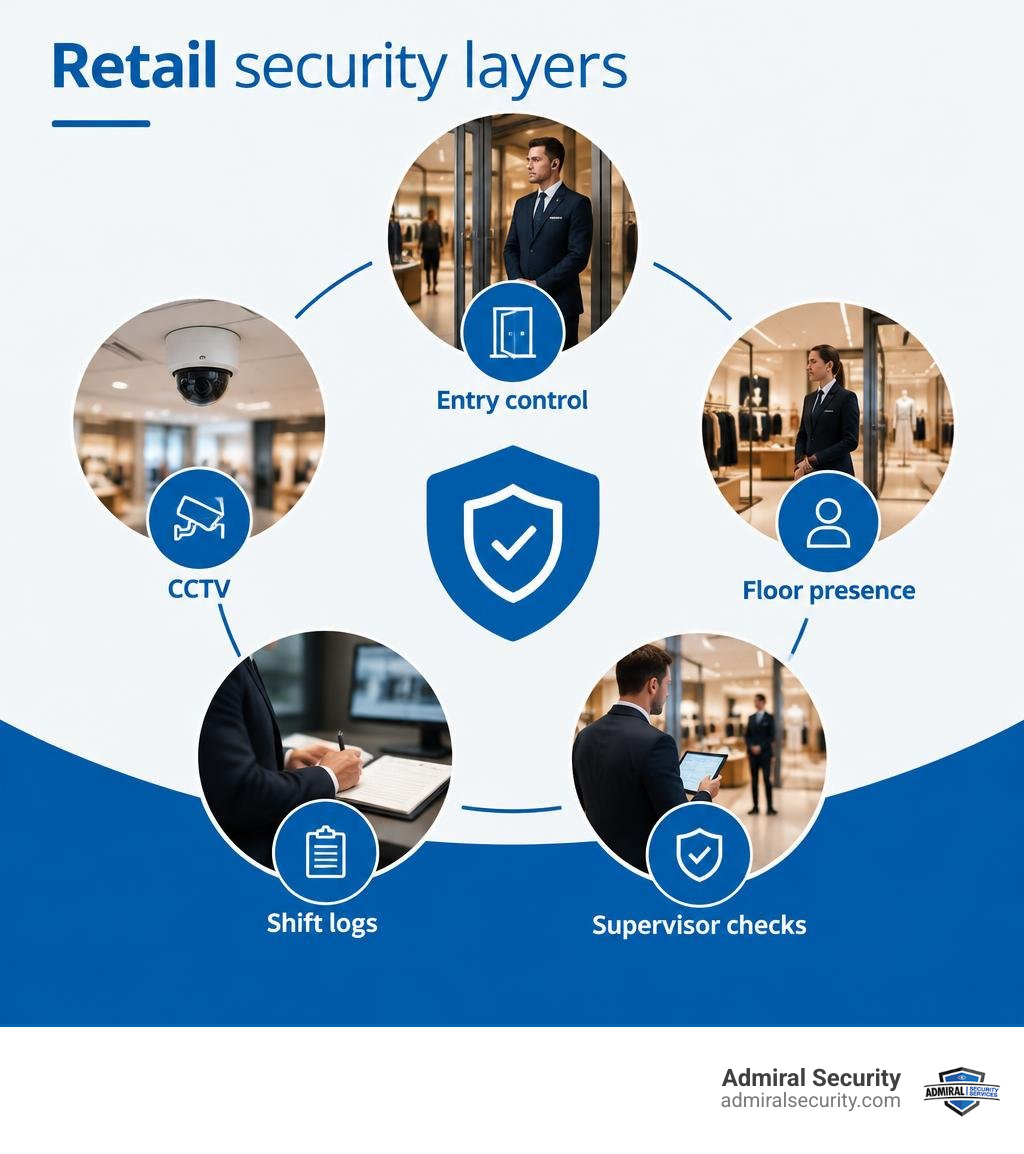
Security guards for retail work best when they have a clear job at every post. At a luxury store, that means managing entry, watching the sales floor and stockroom access, responding calmly to concerns, and recording incidents. Pair those duties with CCTV, access control, and supervisor checks so managers can see what happened during each shift.
A visible, well-briefed officer can help deter theft without making customers feel unwelcome. The key is a plan built around the store’s layout, trading hours, and highest-risk areas, not just a uniform at the door.
Security guards for retail definitions:
The Critical Role of Security Guards for Retail Spaces
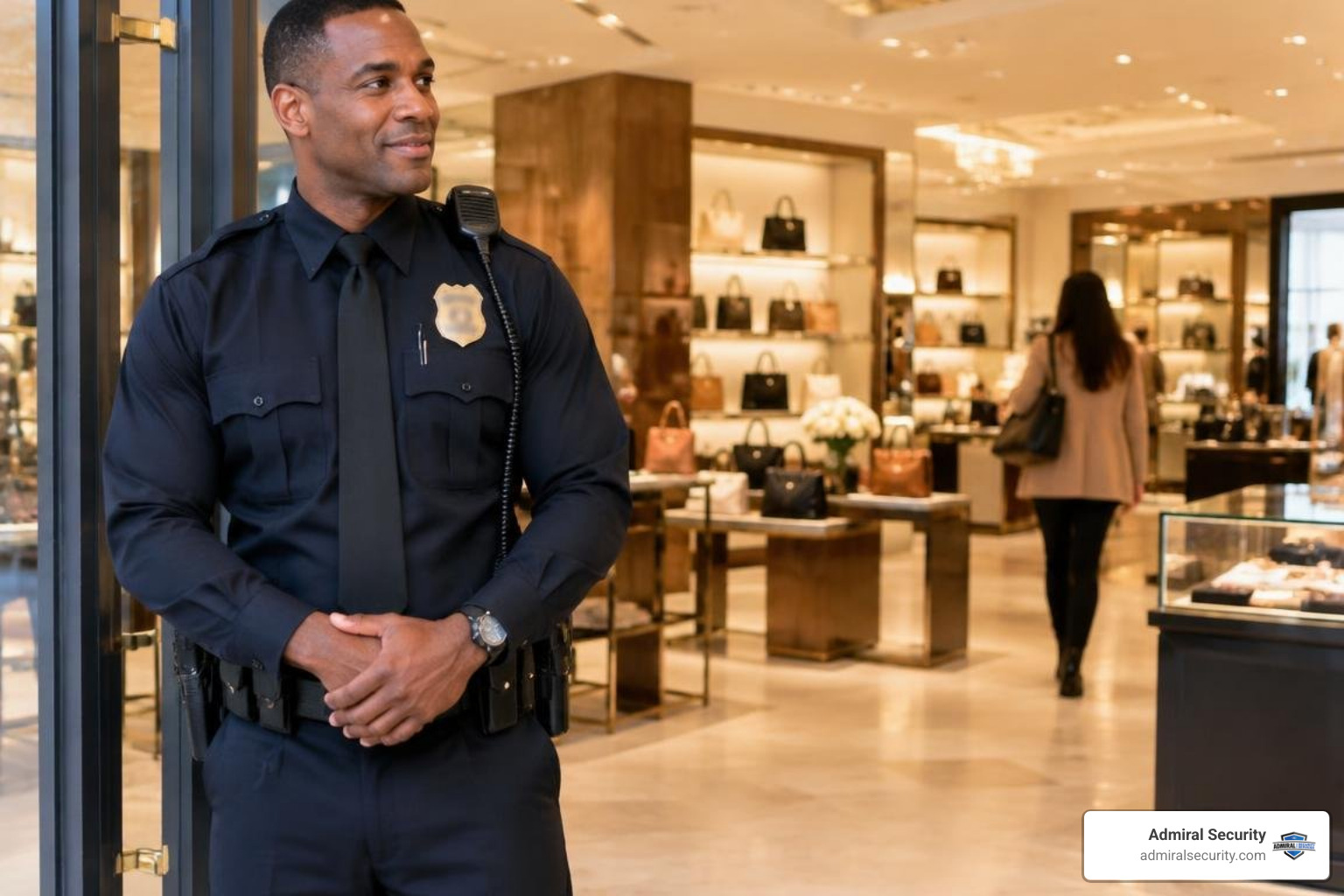
In commercial luxury spaces, the balance between hospitality and loss prevention is delicate. When I assess retail spaces across bustling commercial districts, I often find that store managers struggle with high shrinkage, inventory discrepancies, and concerns over staff safety. Having a visible, alert presence at key entrances and on the sales floor changes that dynamic immediately.
Deploying trained retail security personnel helps establish clear access management while maintaining a welcoming atmosphere for high-value shoppers. A professional officer greets customers with poise, subtly observes browsing behaviors, and maintains visual dominance over vulnerable display cases and fitting room corridors. This visible deterrence stops opportunistic shoplifters before they attempt concealment.
Beyond front-of-house presence, security personnel monitor access to sensitive areas, including stockrooms, vaults, employee break rooms, and delivery bays. Preventing unauthorized foot traffic into inventory holding areas eliminates prime opportunities for stock diversion. Professional officers are also trained in customer service excellence and de-escalation methods aligned with official guidance, such as the Recommendations for Workplace Violence Prevention Programs published by OSHA, ensuring that disputes or suspicious behaviors are resolved smoothly without causing panic among shoppers.
Combating Internal Shrinkage and Refund Fraud
While external theft receives significant public attention, internal loss often represents the largest financial drain on retail businesses. Shrinkage in stock handling and distribution areas is frequently internal or collusive. It occurs when dishonest staff coordinate with outside parties or manipulate transaction registers.
Commercial security officers address internal theft through structured, consistent procedures:
- Point-of-Sale Monitoring: Officers observe the checkout environment to detect suspicious cashier activities, such as sweethearting (failing to scan items for friends), manual price overrides, void manipulation, and unauthorized discounts.
- Refund and Return Verification: Fraudulent returns of stolen merchandise, counterfeit receipts, and fake online order pickups are flagged by monitoring customer service desks.
- Staff and Contractor Search Protocols: Officers conduct consistent, lawful bag and parcel inspections at employee exit points, ensuring that inventory does not leave the building unnoticed.
- Stockroom and Delivery Audits: Officers oversee delivery dock operations, verifying seal numbers on incoming and outgoing containers and ensuring waste disposal routes are not used to discard merchandise for later retrieval.
Applying these processes consistently removes temptation and safeguards retail profit margins without damaging workplace morale.
Lawful Shoplifting Intervention and Loss Prevention Protocols
When an incident of suspected shoplifting occurs, the response must be swift, professional, and strictly compliant with legal requirements. Mishandled detentions can expose retailers to severe legal liabilities, including unlawful arrest claims and reputational damage.
Professional retail officers are instructed on the five fundamental steps of lawful merchant detention:
- Approach and Observation: Visually observe the individual approach the merchandise.
- Selection: Watch the subject physically select the item from the display.
- Concealment: Maintain unbroken observation as the item is concealed on the person or inside a bag.
- Continuous Surveillance: Keep eyes on the suspect as they move through the store to ensure the item is not discarded or placed back on a shelf.
- Passing Points of Payment: Wait until the individual passes all cash registers and exits through the final point of payment without paying before initiating contact.
Upon approach, officers use calm, verbal de-escalation tactics to invite the individual back to an office for administrative processing. Every step is documented in real time, preserving evidence and building an accurate record for management and local authorities.
Operational Discipline: Documented Posts, Accountability, and Supervision
A common mistake in retail security is placing an unbriefed person at the door and hoping for the best. Without clear instructions, officers can become passive, miss obvious risks, and fail to record essential security data. At Admiral Security, we believe security requires a defined post, a written brief, electronic accountability, and active field supervision.
Working with reputable guarding partners ensures that officers follow site-specific post orders. Every shift utilizes digital occurrence logs and electronic checkpoint scanning. Checkpoint tags placed at high-risk displays, fire exits, emergency panels, and perimeter doors verify that officers conduct thorough physical patrols on schedule.
| Feature | Documented Guarding Post | Unmonitored Guard Presence |
|---|---|---|
| Post Orders | Clear, site-specific written instructions | Vague, verbal instructions |
| Patrol Tracking | Real-time electronic checkpoint scanning | Unverified manual patrols |
| Incident Logging | Instant paperless digital occurrence records | Paper logbooks or no written records |
| Supervision | Unannounced field visits and GPS verification | Little to no supervisor oversight |
| Shift Reliability | 100% relief coverage, zero uncovered shifts | High risk of tardiness and vacant posts |
| Loss Reduction ROI | Measurable data and regular audit reviews | Unquantified performance |
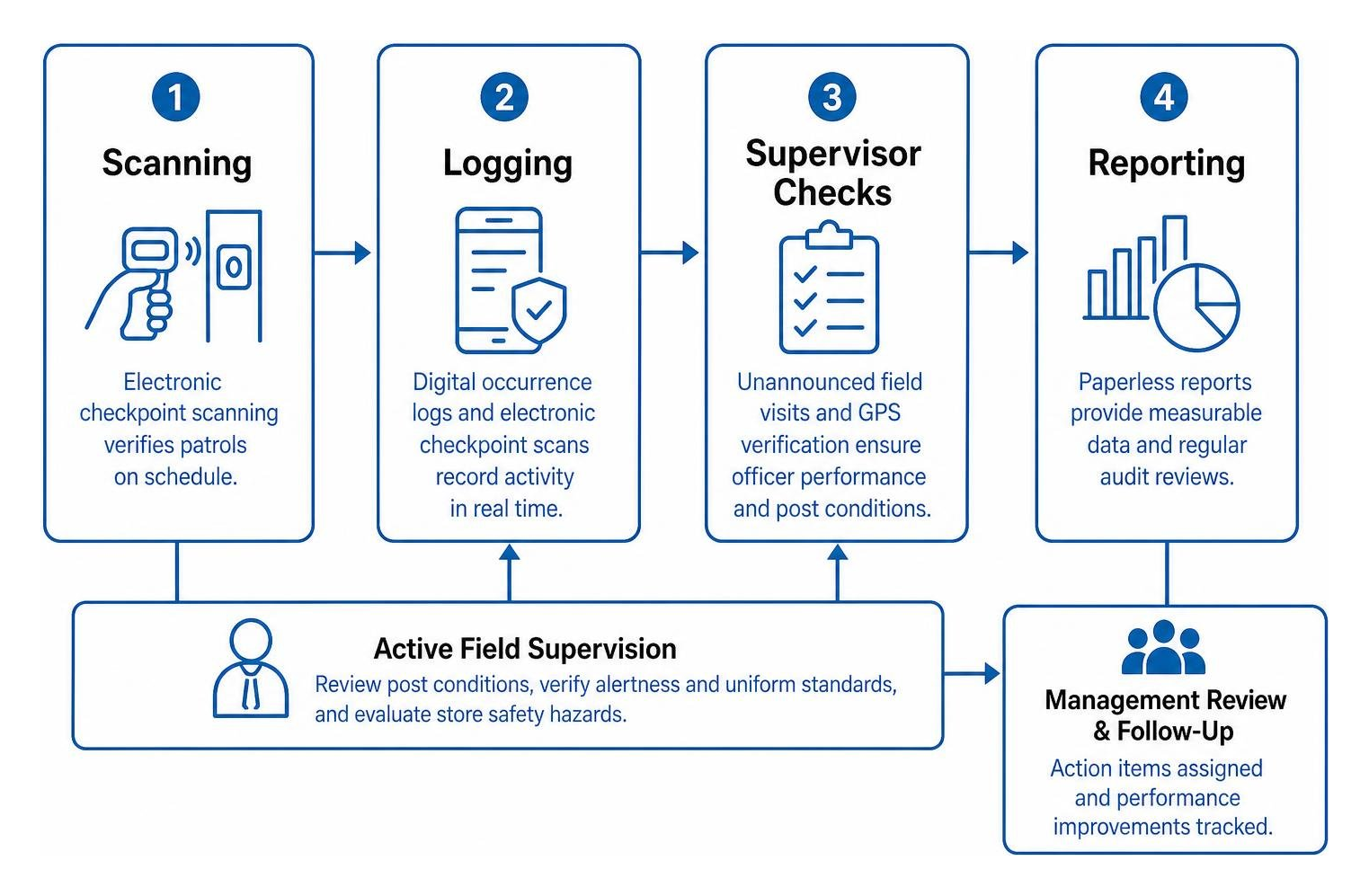
Unannounced supervisor visits keep officers sharp and attentive. Mobile field supervisors review post conditions, verify uniform standards, ensure alertness, and evaluate store safety hazards. If an officer falls ill or encounters an emergency, an automated relief dispatch system ensures a replacement officer is sent out immediately, keeping trading hours and overnight lock-ups covered.
Integrating Security Guards for Retail with Modern Technology Systems
Human observation is most effective when paired with advanced physical security technology. Officers act as the intelligent link between electronic sensors and on-the-ground action.

In modern retail setups, officers work alongside:
- CCTV Surveillance: Monitoring blind spots, fitting room entrances, cash wraps, and loading bays, and conducting live video reviews during suspicious events.
- Electronic Article Surveillance (EAS): Responding calmly and professionally to pedestal gate alarms at entrances, politely verifying purchase receipts, and resolving system false positives.
- Access Control Systems: Managing digital keycards, biometric readers, and visitor logs for restricted back-of-house areas, ensuring deactivated badges are flagged and logged.
- Perimeter and Intrusion Alarms: Conducting perimeter sweeps during opening and closing sequences, verifying all exterior doors are secure, and addressing after-hours alarm notifications.
By connecting on-site staff with electronic systems, store owners get a reliable, multi-layered security plan that leaves no gaps.
Managing Multi-Site Chains, Relief Shifts, and Deployment Timelines
For regional retail chains and franchise networks, maintaining consistent security standards across multiple stores can be demanding. A centralized security contract streamlines this process by providing a single point of contact, standardized operating procedures, and consolidated monthly performance reporting.
When onboarding new storefronts, an experienced team conducts a thorough site risk assessment, drafts custom post orders, and briefs staff within a 24 to 48 hour setup window. Roster management platforms schedule dedicated officers while maintaining fully trained relief pools. If unexpected foot traffic surges or special sales events occur, additional personnel can be quickly dispatched without compromising the standard daily operations of existing locations.
Strategic Guard Selection: Deployment and Regulatory Compliance
Selecting the right guarding personnel involves evaluating your inventory value, physical store layout, foot traffic volume, and neighborhood risk factors. Every store has unique security needs, and understanding these variables ensures your budget delivers measurable loss prevention.
Retailers often benefit from reviewing unarmed retail security strategies to establish an approachable, safe customer environment. Tailoring officer duties to specific risk levels prevents over-spending while providing reliable coverage for your daily trading hours.
Choosing Between Armed and Unarmed Guard Deployments
Deciding between armed and unarmed officers depends heavily on the nature of your merchandise, location dynamics, and operational environment.
For the vast majority of luxury boutiques, apparel outlets, electronics stores, and shopping centers, highly trained unarmed officers provide the ideal solution. Unarmed guards offer approachable customer service, attentive floor walking, disciplined access control, and active de-escalation without creating an intimidating atmosphere.
Armed deployments are typically reserved for specialized, high-risk scenarios involving massive volumes of physical cash processing, ultra-high-end fine jewelry vaults, or facilities facing specific high-level external threats. For standard retail spaces, focusing on disciplined physical procedures, active access management, and visible customer engagement delivers excellent deterrence and maintains an inviting shopping experience.
Vetting and Regulating Security Guards for Retail Operations
Security personnel represent your brand directly to the public. Because of this, verifying regulatory compliance and screening standards is vital:
- Licensing and Registration: Verify that every officer holds active registration and state-mandated security credentials in their own name.
- Background Checks: Ensure that comprehensive criminal history checks, background screening, and drug testing are completed prior to deployment.
- Site-Specific Orientation: Require pre-deployment training on your brand guidelines, emergency evacuation routes, cash handling protocols, and internal incident response plans.
- Ongoing Professional Development: Ensure personnel receive regular refresher courses on customer service etiquette, de-escalation techniques, and electronic system operation.
These standards ensure that every guard on your sales floor carries out their duties with skill, logic, and professional care.
Frequently Asked Questions About Retail Guarding
How much do professional commercial security guards cost for retail stores?
Security service pricing depends on officer skill requirements, post duties, shift length, and specific site risk levels. Standard rates align with statutory wage minimums, insurance coverage, administrative oversight, and supervisor support. A professional provider conducts a complimentary site risk assessment to recommend an optimal schedule, balancing daytime customer-facing coverage and overnight building lock-up to keep services cost-effective.
How quickly can guards be deployed to a new retail location?
Standard deployments for retail stores generally take 24 to 48 hours following a site assessment and service agreement. This timeline allows security leaders to inspect store layouts, draft clear post orders, and fully brief officers on store procedures. For urgent emergency needs, rapid-response deployments can often be coordinated much faster to provide immediate physical coverage.
What reports and oversight do retail store managers receive?
Store managers receive real-time visibility through digital occurrence logs, automated checkpoint tour summaries, and immediate incident alerts. At the end of every monthly cycle, clients receive an executive report summarizing completed patrol sweeps, security exceptions, supervisor field reviews, and practical recommendations to enhance store safety and shrink management.
Conclusion
Securing a high-end luxury retail space requires more than just placing a guard by the entrance. True loss prevention combines disciplined post orders, trained customer-facing officers, integrated security technology, and active field supervision. By eliminating internal shrinkage, deterring external theft, and maintaining a welcoming shopping atmosphere, professional security measures deliver real financial value.
At Admiral Security, we deliver reliable guarding solutions backed by deep industry experience, responsiveness, and authentic care for our clients and staff. Our structured approach to corporate security, access management, and comprehensive security risk management services ensures your inventory, premises, and brand reputation remain safe every business day.