

How to Book Security Guards for Corporate and Sports Events
To book security guards for events, give providers your guest count, venue layout, entry points, event hours, and alcohol plans. Ask for a written staffing plan, proof of licensing and insurance, and an itemized quote. In the US, event security often costs $35 to $60 per guard per hour, though location, staffing needs, and shift minimums affect the total.
Corporate events may need quiet check-in and access control for private areas. Sports events often need more staff at gates, seating areas, and exits. Book early enough to review the site, set guard posts, and agree on an emergency plan.
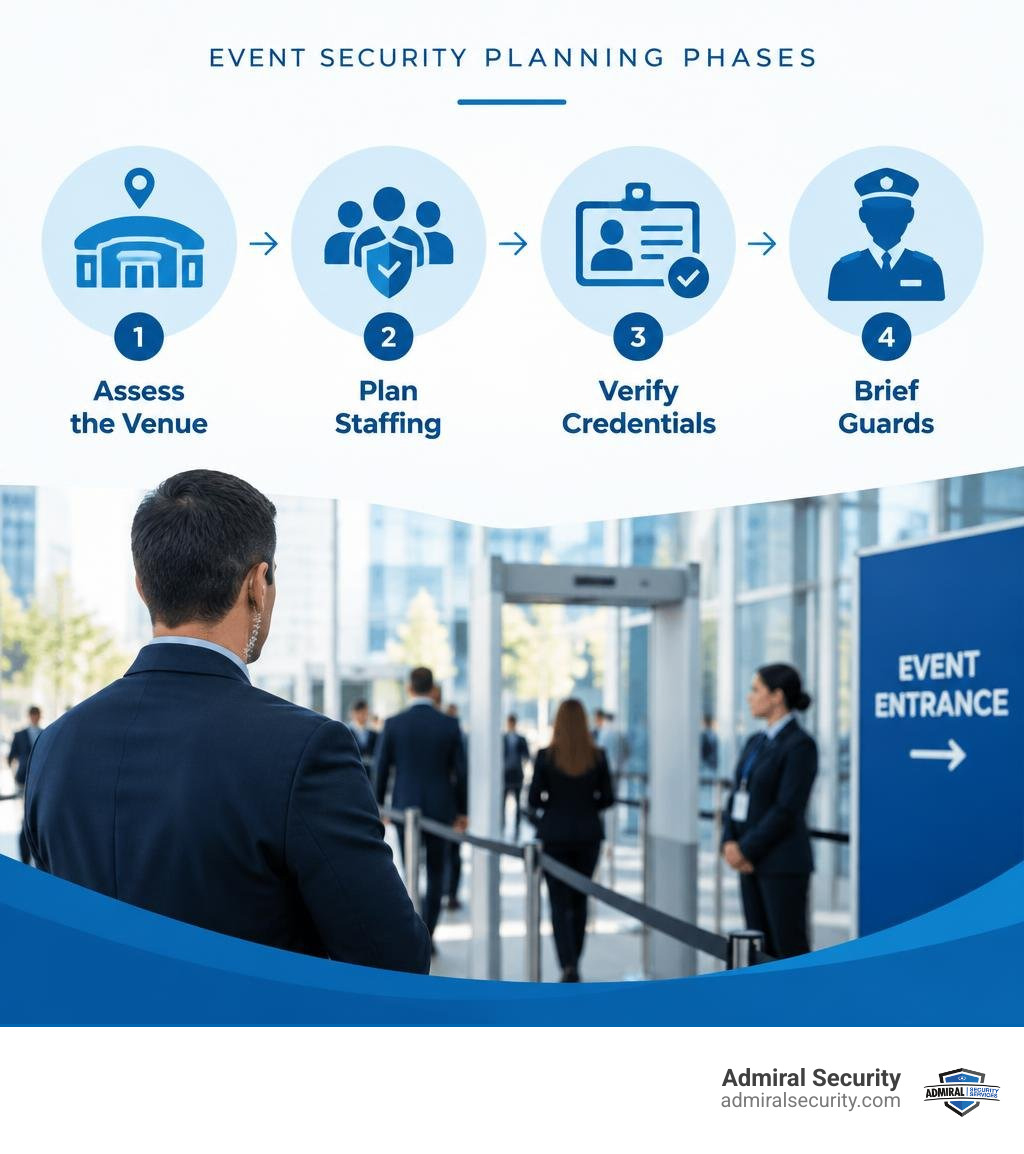
The process follows a clear sequence: assess the venue, plan staffing levels, verify credentials, and brief guards before doors open. Industry guidance from the Occupational Safety and Health Administration offers crowd management safety guidelines for large events that help organizers anticipate risks at entry points, walkways, and exits. Important security guards for events terms:
Core Responsibilities of Security Guards for Events
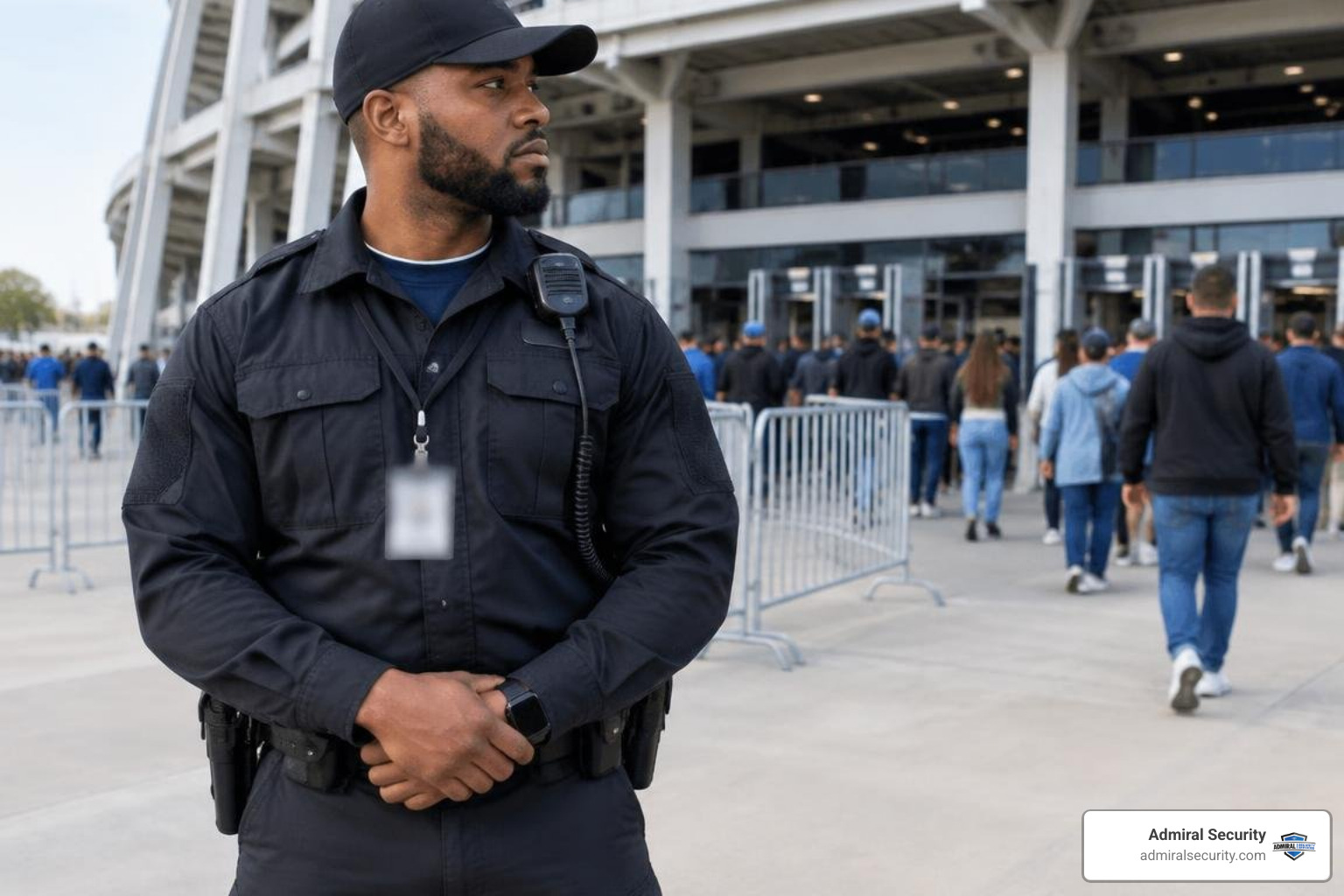
When I manage security operations for high-profile gatherings, I know that success comes down to preparation and clear post orders. Event security officers maintain order, support venue safety, and keep the guest experience smooth from the moment gates open until the last patron leaves. Their visible presence deters unauthorized activity while providing immediate reassurance to guests and staff. Security personnel handle each task with a security risk management mindset that emphasizes prevention, early intervention, and clear communication.
Security personnel do far more than stand at doors. They oversee perimeters, monitor assembly areas, enforce venue regulations, and document operational incidents in real time. Every officer follows a structured routine that keeps the event safe without making attendees feel restricted.
Access Control and Credentialing Protocols
Managing who enters your venue is your first line of defense. Officers oversee primary entryways, verify tickets, inspect bags, and manage walk-through metal detectors or handheld magnetometers. A well-run entry screening process sets the tone for the entire event and prevents unauthorized items from reaching the crowd.
To maintain order behind the scenes, I recommend setting up tiered credentials. You can explore our complete guide on credentialing and access screening to see how color-coded badges, tamper-evident wristbands, and digital scans prevent unauthorized entry into production zones, media rooms, and executive suites. Clear credentialing keeps lines moving fast and stops uninvited individuals from reaching restricted back-of-house areas. Officers stationed at secondary access points confirm that contractors, vendors, and staff display the correct credentials before entering sensitive zones.
Crowd Flow, De-Escalation, and Alcohol Management
Congestion creates frustration, and frustration leads to safety risks. Event guards monitor foot traffic across major choke points, guide lines at concessions, and ensure clear egress paths to emergency exits. A steady, predictable flow reduces the chance of crowding incidents and helps attendees move comfortably through the venue.
When alcohol is served, security staff work closely with bartenders to check identification and monitor consumption levels. If a patron becomes disruptive, guards step in early. We rely heavily on de-escalation trained officers who use calm communication and firm body language to defuse tension before physical intervention becomes necessary. When an ejection is required, officers follow lawful protocols and document the event thoroughly to mitigate client liability. Consistent alcohol management also helps venue operators remain compliant with local serving regulations and occupancy requirements.
Emergency Planning and Multi-Agency Coordination
No event security plan is complete without solid emergency response protocols. Officers are trained to spot hazards, assist with medical emergencies by clearing pathways for first responders, and direct crowd movement during severe weather or building evacuations. Their familiarity with the venue layout allows them to guide attendees to safe locations quickly and without confusion.
Guards serve as the on-the-ground liaison for local police and emergency medical teams. When organizing an operational schedule, I always refer back to our event security checklist to verify that communication channels, primary evacuation routes, and first-aid locations are fully aligned before doors open. Consistent radio protocols, designated assembly points, and clear roles for supervisors ensure that every responder can act without delay when an incident occurs.
Staffing Ratios and Operational Planning by Event Type
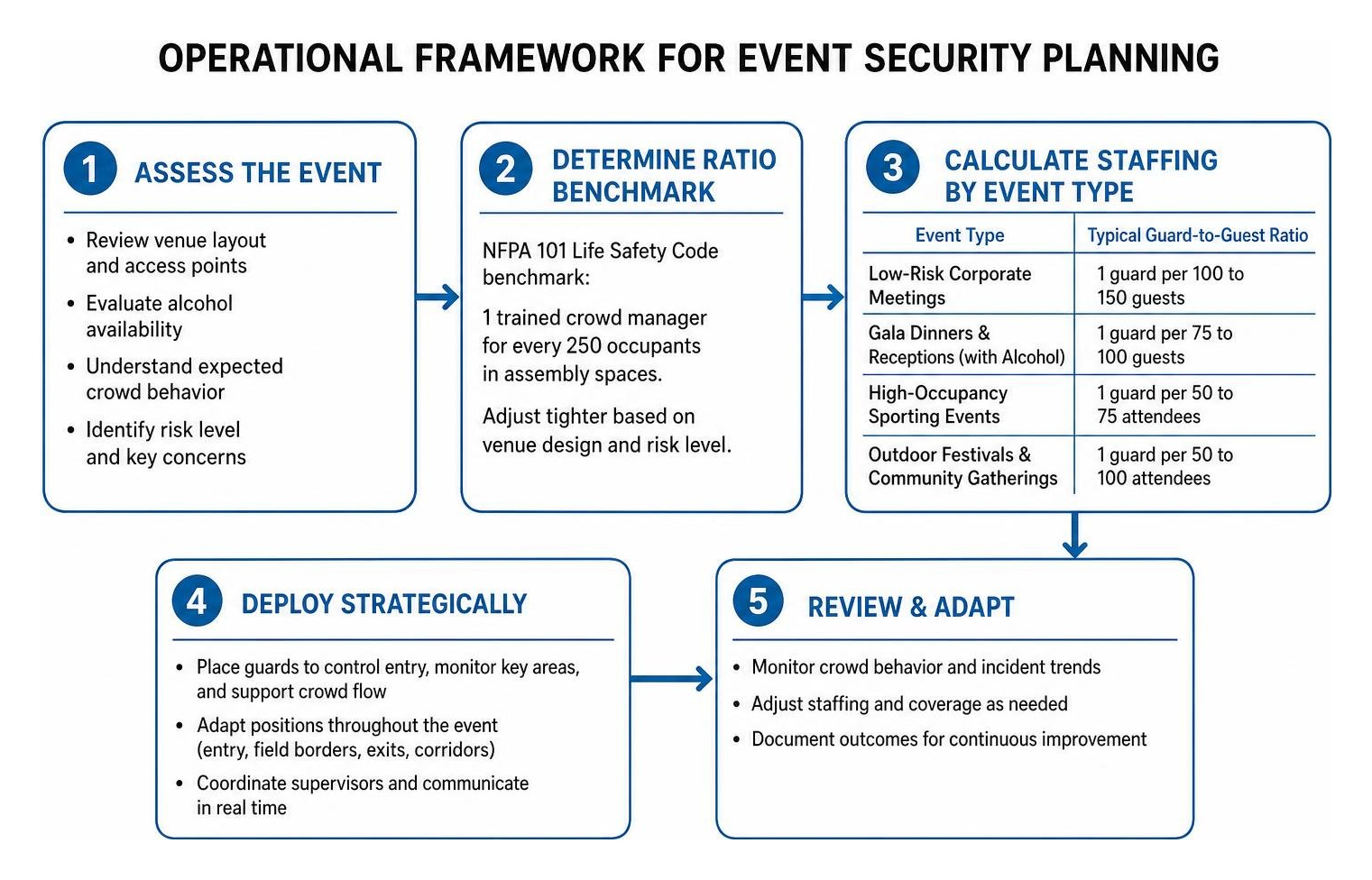
Every gathering brings distinct security challenges. A quiet corporate shareholder meeting in Boston requires a completely different approach than a packed stadium football game in Houston or a beachfront gathering in Miami. I build staffing numbers around venue layout, alcohol availability, and expected crowd behavior rather than relying on arbitrary formulas. A detailed site walkthrough helps me identify vulnerable points, such as unmonitored side doors, narrow corridors, or parking areas with poor visibility.
Calculating Ratios: Sizing Security Guards for Events
A widely accepted industry benchmark comes from NFPA 101 Life Safety Code standards, which commonly require one trained crowd manager for every 250 occupants in assembly spaces. Depending on the venue design and risk level, your overall guard-to-guest ratio may need to be tighter. High-energy events with dense crowds, multiple stages, or late-night schedules generally require more staff per guest than daytime business meetings.
| Event Type | Typical Guard-to-Guest Ratio | Primary Security Focus |
|---|---|---|
| Low-Risk Corporate Meetings | 1 guard per 100 to 150 guests | Discreet check-in, room access, asset safety |
| Gala Dinners & Receptions (with Alcohol) | 1 guard per 75 to 100 guests | ID verification, queue flow, de-escalation |
| High-Occupancy Sporting Events | 1 guard per 50 to 75 attendees | Bag screening, perimeter monitoring, seating control |
| Outdoor Festivals & Community Gatherings | 1 guard per 50 to 100 attendees | Perimeter integrity, lost patron support, entry gates |
For a complete breakdown on calculating staffing needs, read our guide on event security officer staffing. The right ratio also depends on how many separate zones require monitoring, how many entry points are open, and whether the event includes high-profile attendees who need a stronger visible presence.
Corporate Functions and VIP Gatherings
Corporate conferences, product reveals, and executive summits demand polished, customer-service-driven security. Officers often wear professional blazers or suits rather than high-visibility uniforms to blend into upscale environments. A discreet appearance helps maintain a welcoming atmosphere while still providing the access control and security risk management that corporate clients expect.
Key duties include safeguarding proprietary presentations, monitoring private green rooms, and managing discreet executive access. I suggest reviewing our framework for VIP event security planning to ensure that executive travel routes, private parking areas, and private meeting suites remain secure without disrupting the event flow. Corporate organizers also benefit from a clear plan for handling unauthorized visitors, media inquiries, and unexpected schedule changes.
High-Volume Sporting Events and Stadium Arenas
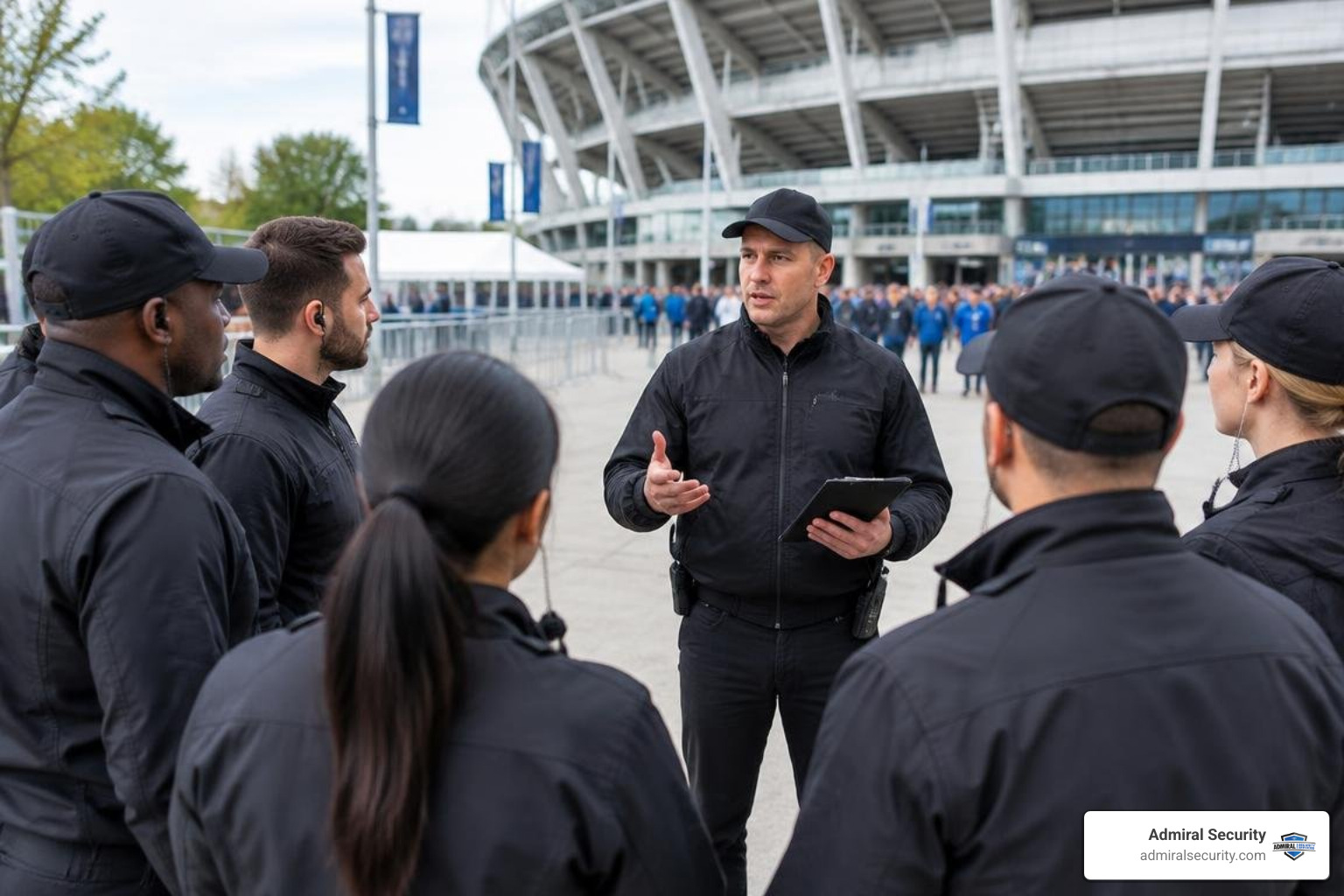
Stadiums and arenas involve massive crowd movements, emotional fans, and complex perimeter layouts. Officers secure player tunnels, monitor seating sections, manage tailgating zones, and maintain order during high-stakes rivalries. Consistent positioning at entry gates, field-level access points, and upper concourses gives supervisors a complete operational view of the venue.
Strategic guard placement ensures smooth entry screening and prevents bottlenecking during post-game egress. Using proven techniques for deploying guards strategically allows supervisors to shift personnel dynamically from entry gates to field borders and exit corridors as the event progresses. After the final whistle, officers should focus on keeping exit routes clear, separating opposing fan groups, and preventing crowd crush at narrow stairwells or gate openings.
Budgeting and Cost Factors for Event Security Personnel
Security costs vary across the country based on local labor rates, insurance, and event scope. In the United States, baseline rates generally fall between $35 and $60 per guard per hour. Regional demand, venue requirements, and the experience level of assigned officers all influence the final invoice.
Contract terms typically require a minimum shift length of 4 to 6 hours per officer. Planning your budget means accounting for these minimums alongside supervisory hours, specialized equipment, and holiday or late-night rates. A clear budget also gives you room to adjust staffing if the guest count climbs or additional access points open in the final weeks before the event.
Evaluating Hourly Rates and Contract Minimums
Rates shift depending on your city. In major metropolitan centers like New York or Miami, hourly rates often span $37 to $75 per guard per hour. In regional markets such as Richmond, Virginia Beach, or Greensboro, hourly rates often land closer to $30 to $50 per hour. The same event brief can produce noticeably different quotes across state lines, so I always compare line items rather than headline rates alone.
When comparing estimates from event security providers, look beyond the base hourly rate. Confirm whether the quote includes supervisory staff, two-way radio rentals, wanding metal detectors, and pre-event briefings so you do not encounter unexpected costs later. Ask about overtime policy, holiday surcharges, and cancellation terms before signing so your budget covers the full service window.
Licensing, Compliance, and Vetting Security Guards for Events
Every state enforces specific licensing mandates for private security personnel. In Florida, guards must hold an active Class D license through the FDACS. In Maryland, Virginia, North Carolina, and Texas, officers must hold valid state registrations and undergo background checks before being deployed. These requirements safeguard both the public and the event organizer from unqualified or improperly trained personnel.
Always verify that your provider carries comprehensive commercial general liability insurance, workers’ compensation coverage, and all required state master licenses. For a complete evaluation checklist, consult our guide to vetting trusted security providers. Choosing a fully compliant provider reduces legal exposure and ensures that officers arrive with the training and credentials required to manage your event safely.
Frequently Asked Questions About Event Security
How much do event security guards cost per hour?
In the US, event security guards typically cost between $35 and $60 per hour per guard. Rates vary depending on the metropolitan area, the complexity of the event, holiday scheduling, and whether you require specialized personnel or basic entry monitors. Most firms also enforce a 4 to 6 hour minimum per shift.
How many guards are required per 250 attendees?
Under NFPA 101 standards for assembly occupancies, venues generally require at least one trained crowd manager per 250 occupants. For events serving alcohol or gatherings with multiple entry gates and separate VIP areas, organizers typically increase staffing to 2 or 3 guards per 250 guests to maintain safety.
How far in advance should event security be booked?
You should book event security 4 to 8 weeks in advance for standard corporate or sporting events. For large-scale gatherings requiring municipal permits, street closures, or multi-agency coordination with local police and EMS, begin booking 3 to 6 months ahead to ensure proper site walks and staffing allocation.
Conclusion
Securing a corporate conference, sports match, or community gathering requires proactive security risk management, clear access control, and well-trained personnel. By assessing your venue layout, establishing proper crowd ratios, and verifying officer licensing well in advance, you create a safe, organized environment where attendees can focus entirely on the experience.
When you need dependable, responsive, and thoroughly vetted personnel for your next gathering, turn to professional event security solutions from Admiral Security to keep your venue running smoothly. Booking early, reviewing credentials carefully, and aligning staffing levels with your event type all contribute to a safer, more enjoyable occasion for every guest.