

Why Continuous Security Monitoring Matters
Security monitoring is the ongoing collection and review of security signals across facilities, networks, devices, applications, cloud systems, and third parties. Its purpose is simple: spot unusual activity early, verify what happened, and trigger the right response before a small issue becomes a major disruption.
For commercial real estate, retail, and operations teams, the strongest approach combines continuous visibility with clear escalation paths. That means monitoring the assets that matter most, centralizing alerts where possible, tuning out routine noise, and measuring how quickly teams detect and resolve real incidents.
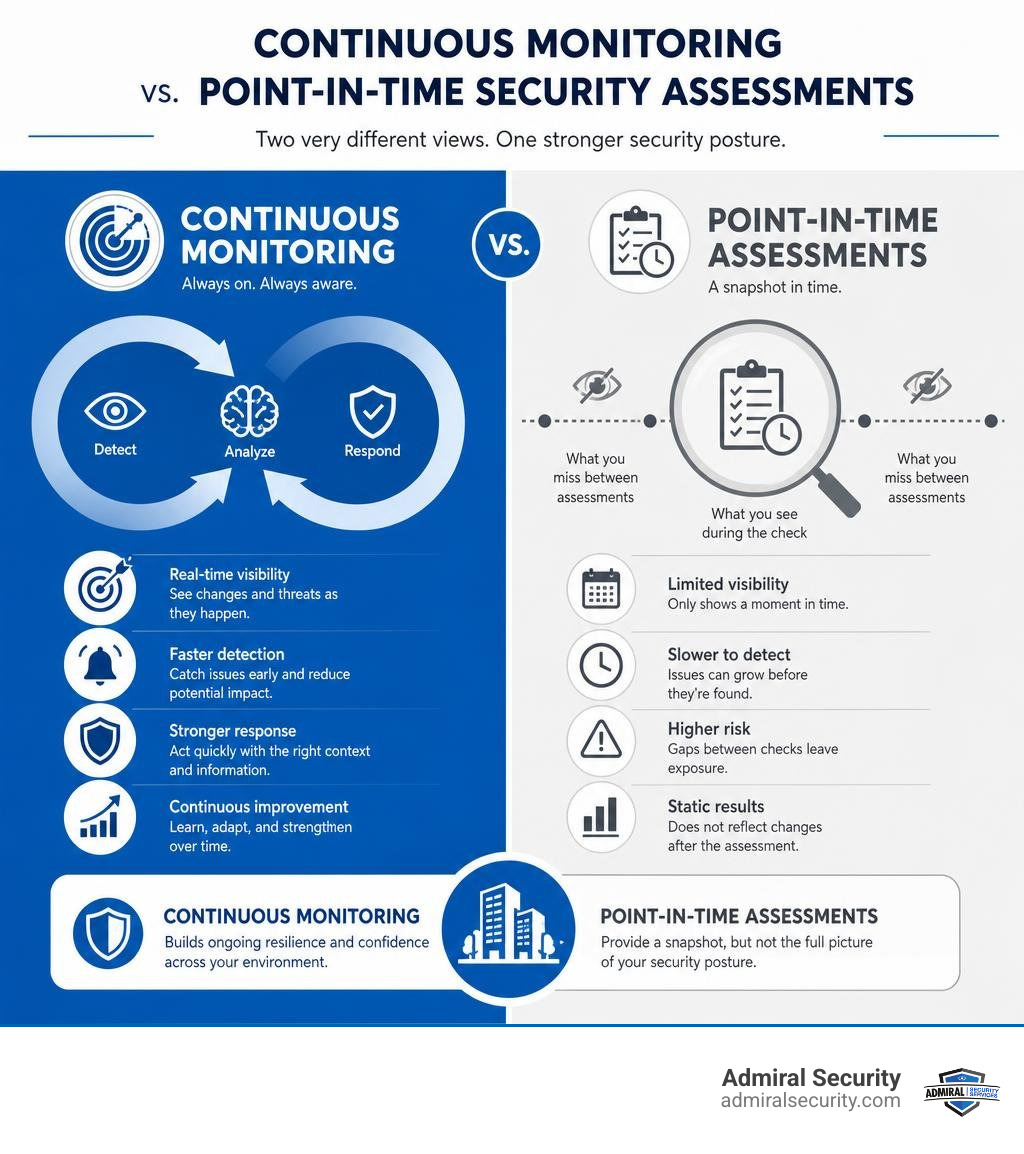
Point-in-time checks still have value, but they only show a snapshot. Threats, access changes, device failures, and vendor risks can emerge between audits. Continuous monitoring helps teams see those changes as they happen.
The stakes are high. The global average cost of a data breach was $4.22 million in 2024. Yet effective monitoring is not only about cyber events. When digital signals connect with video, access control, and on-site response, organizations gain stronger situational awareness across their full operating environment.
Core Dimensions of Modern Security Monitoring
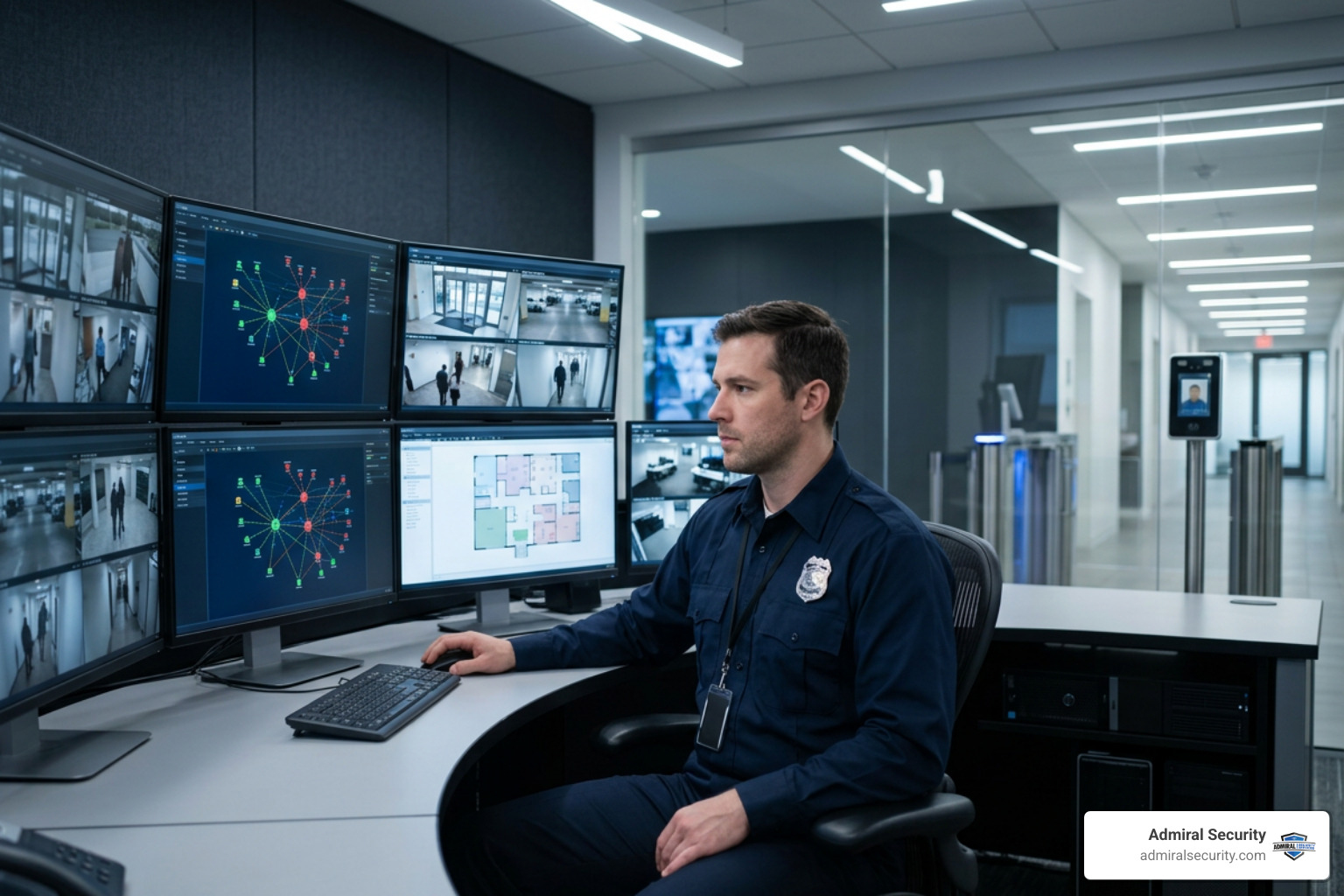
When I evaluate an organization’s overall posture, I break visibility down into distinct operational domains. Modern security risks do not live exclusively inside an email inbox, behind an office door, or within a single cloud database. They move across digital and physical boundaries.
To maintain situational awareness, an enterprise must address several operational dimensions simultaneously:
| Monitoring Dimension | Core Data Sources | Primary Objectives | Typical Visibility Gap |
|---|---|---|---|
| Network Monitoring | Flow logs, packet captures, DNS queries, firewall sessions | Detect unauthorized traversal, lateral movement, and command-and-control beacons | Encrypted payloads and internal east-west traffic blind spots |
| Endpoint Monitoring | Host logs, process execution, memory access, registry changes | Identify unauthorized script execution, credential dumping, and device tampering | Unmanaged remote devices and missing host agents |
| Cloud Monitoring | VPC flow logs, IAM role assumptions, storage bucket access, API calls | Spot cloud misconfigurations, exposed storage, and privilege escalation | Multi-cloud data fragmentation and complex microservices |
| Physical Monitoring | Video surveillance, badging events, door sensors, visitor logs | Prevent physical perimeter breaches, tailgating, and facility intrusion | Disconnected badging systems and slow human escalation |
To bring these layers into alignment, security leaders must look closely at how each domain handles incoming telemetry.
Endpoint and Network Threat Telemetry
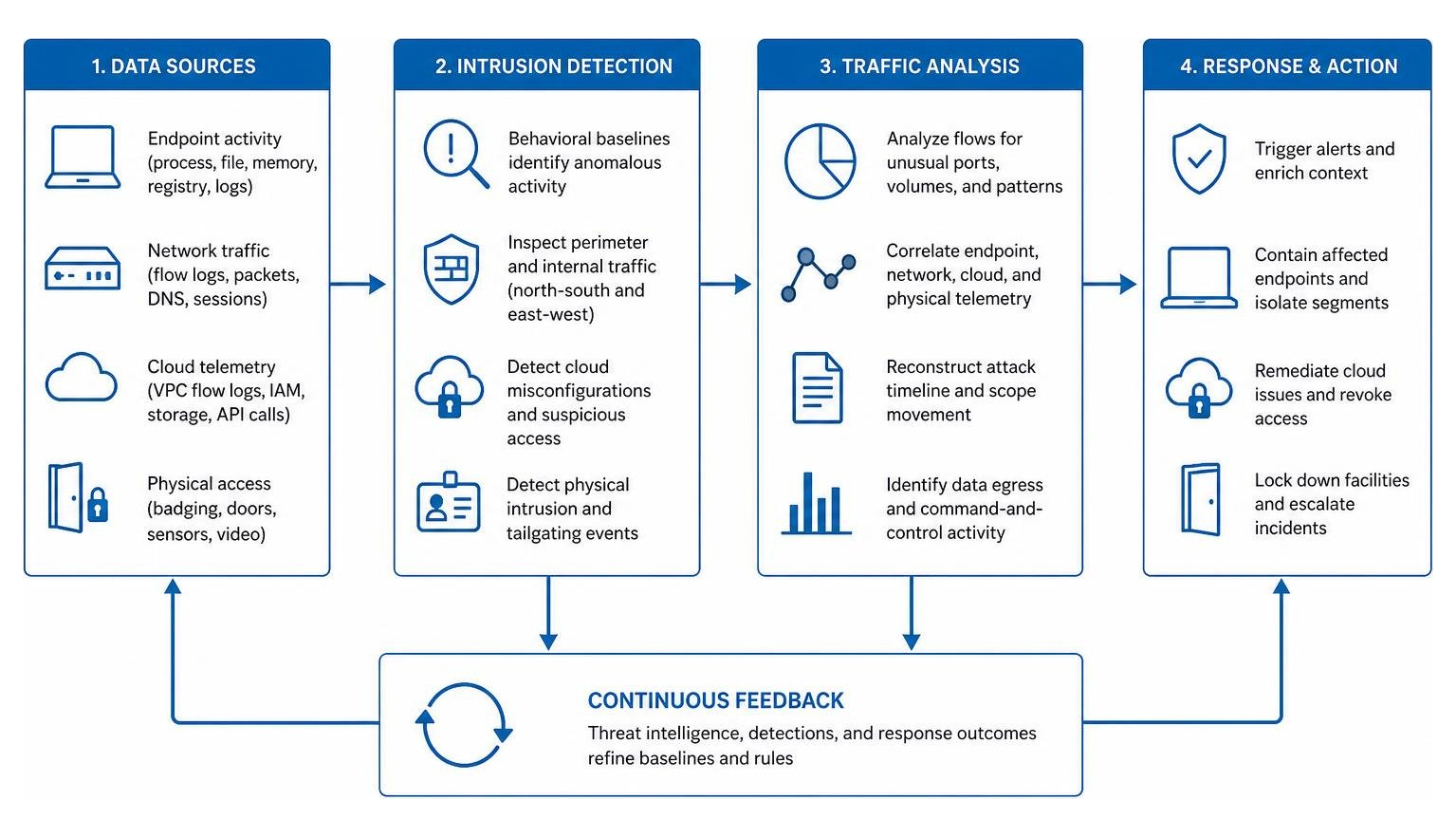
Endpoints serve as the primary workspace for employees, making them the most common entry point for hostile activity. When an employee clicks a questionable link or downloads an unapproved file, endpoint visibility determines whether an incident is contained immediately or develops into a widespread disruption.
I focus heavily on host-level behavioral baselines. Capturing granular telemetry, such as endpoint system activity logging, allows teams to monitor process creation, remote thread injections, and unexpected modifications to system files. Rather than relying solely on static signature detection, behavioral tracking catches anomalous actions, like an administrative process executing from a temporary folder or an unauthorized script reading credentials from memory.
Simultaneously, network telemetry monitors the flow of data across routers, switches, and firewalls. Network security monitoring functions on the assumption that perimeter defenses are never entirely impenetrable. By capturing transactional session metadata, security systems identify anomalous internal communication, unusual port usage, or mass data transfers across subnets. Combining endpoint activity logs with real-time network flow data gives teams the full context needed to trace anomalous activity from its origin to its destination.
Cloud and Perimeter Intrusion Detection
As organizations migrate critical workloads to hybrid and cloud environments, perimeter defense requires dynamic software definitions rather than fixed physical firewalls. Cloud assets face rapid configuration changes, dynamic API calls, and scalable virtual infrastructure.
Deploying cloud-native intrusion detection capabilities allows organizations to inspect north-south traffic entering the environment as well as east-west movement between internal cloud workloads. Through packet mirroring, internal traffic can be analyzed without introducing operational latency or altering host-level code.
Effective cloud monitoring tracks unexpected storage permissions, suspicious administrative logins from unfamiliar locations, and sudden spikes in outbound data transfers. Inspecting egress traffic prevents unauthorized parties from funneling proprietary business information outside the company’s approved network boundary.
Evaluating Monitoring Architectures and Tool Stacks
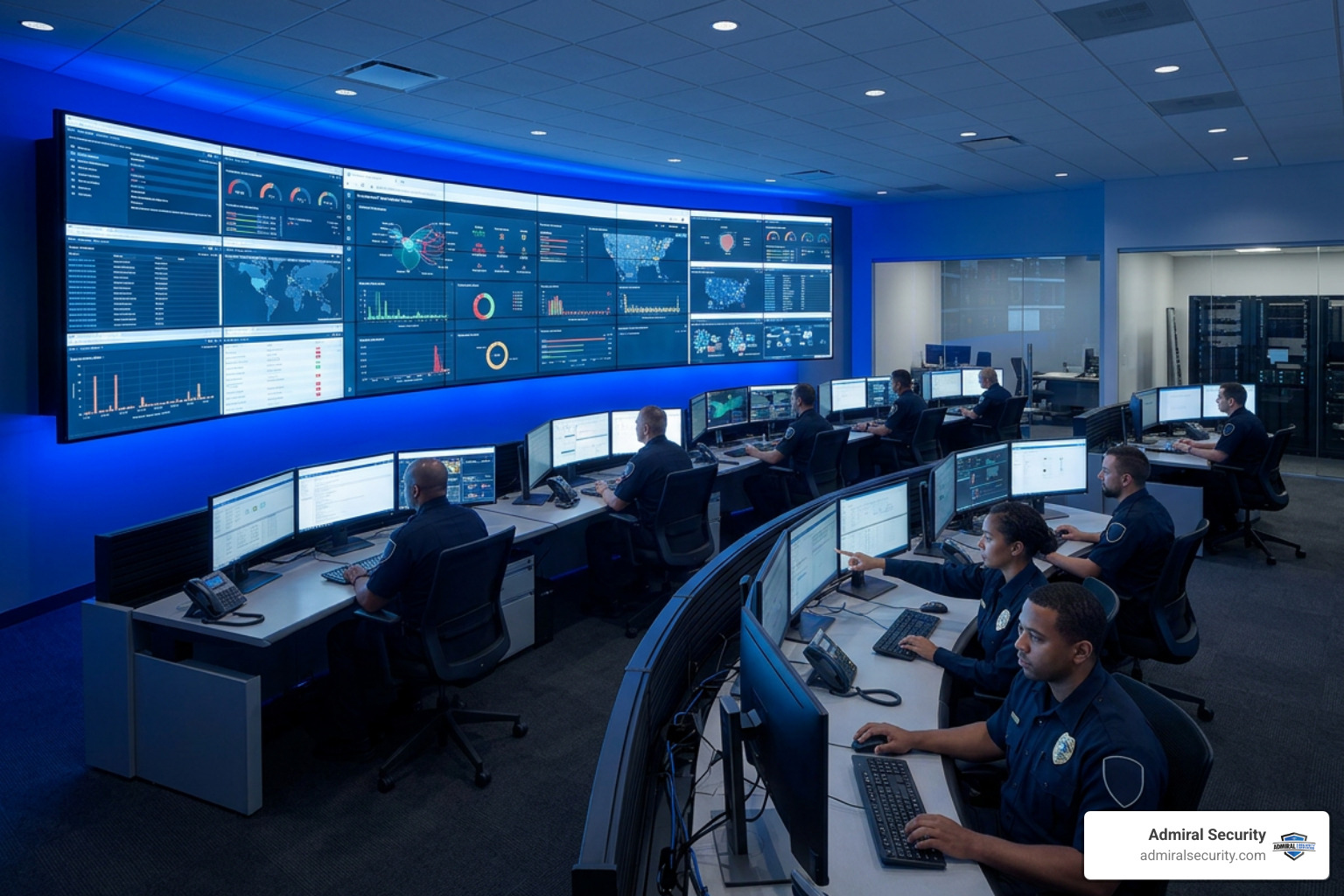
One of the largest hurdles facing enterprise security leaders is tool sprawl. The average enterprise security stack consists of 76 distinct tools. Managing dozens of disparate dashboards creates data silos, increases overhead, and leads directly to analyst fatigue. When alerts trigger across isolated consoles, security personnel spend critical time toggling between screens instead of addressing active risks.
To overcome fragmentation, organizations rely on centralized correlation systems. Modern Security Information and Event Management (SIEM) and autonomous management platforms ingest logs from servers, network devices, endpoints, and identity directories.
Platforms such as IBM QRadar SIEM, Microsoft Sentinel – Cloud-native SIEM for SOCs | Microsoft Security, and Google Security Operations | Google Cloud centralize these disparate data streams, cross-referencing activity against structured frameworks like MITRE ATT&CK. Research shows that analysts using QRadar SIEM observed a 90% reduction in time spent investigating incidents, along with a 60% reduction in the risk of experiencing a significant security breach. Furthermore, analysts using that system saved more than 14,000 hours over three years solely on identifying false positives.
Consolidating telemetry into a single operational interface reduces investigation timelines from days to minutes.
Integrating Physical and Digital Security Monitoring
True resilience requires bridging the gap between digital telemetry and on-site facility security. In many commercial settings, physical security systems and digital security consoles operate in complete isolation. An electronic door forced open after hours might trigger a local sounder, while an unauthorized badge login at a server rack triggers an isolated IT ticket.
When organizations connect these data streams, situational awareness improves dramatically. Evaluating comprehensive video monitoring options helps teams select high-definition cameras and automated video analytics that feed live operational updates directly to dispatch teams.
Integrating live surveillance with electronic access control systems creates a verified audit trail. If a credential is used at an exterior doorway in Baltimore, MD, while the corresponding user account initiates a digital session from Boston, MA, the correlation engine flags the anomaly instantly.
From there, security workflows dispatch trained uniformed personnel or initiate mobile patrol coordination to physically verify the facility perimeter, inspect entry points, and ensure building safety. This responsive union of modern technology and on-site officers preserves property value and ensures operational continuity.
Advanced Analytics and Machine Learning
The volume of operational logs generated by an enterprise can easily reach tens of terabytes every day. Human teams cannot manually review millions of raw events. This reality has accelerated the deployment of artificial intelligence, machine learning, and platforms like Alaris Security | Autonomous Security Operations.
Modern analytics platforms utilize User and Entity Behavior Analytics (UEBA) to learn standard behavioral patterns for individual employees, administrative roles, and hardware devices. If an account suddenly accesses sensitive files during off-peak hours or attempts thousands of system queries in seconds, automated systems elevate the risk score.
Furthermore, generative AI assistants and natural language search interfaces help operations teams investigate complex incidents without writing custom database queries. Studies indicate that implementations like Security Copilot reduce mean time to respond (MTTR) for security incidents by approximately 30%. By automating repetitive triage tasks, security leaders empower their personnel to focus on higher-level risk mitigation and strategic facility planning.
Framework for Selecting and Deploying Monitoring Solutions
Implementing a resilient monitoring strategy requires careful planning, executive alignment, and structured deployment phases. Purchasing sophisticated software or high-end cameras provides little benefit if detection rules are poorly configured or escalation paths remain undefined.
When building an enterprise strategy, organizations must take several foundational steps:
- Asset Identification and Classification: Catalog all physical facilities, servers, cloud workloads, and sensitive data repositories. Prioritize visibility around your highest-value assets.
- Security Risk Assessment: Evaluate operational workflows to locate blind spots, unmonitored entry doors, unmanaged remote devices, and outdated software systems.
- Architecture and Vendor Selection: Deploy scalable, interoperable advanced security technology that unifies access control, video feeds, and digital telemetry without creating new operational silos.
- Policy Definition and Incident Playbooks: Establish precise response protocols. Define clearly who receives an alert, when on-site officers are dispatched, and how facility managers are notified.
- Continuous Workforce Training: Educate staff on badge hygiene, physical tailgating awareness, and phishing threats, reinforcing a culture of vigilance.
- Periodic Review and Rule Tuning: Continuously refine alert thresholds to minimize false alarms and adapt to emerging operational challenges.
Implementing Continuous Security Monitoring
Rolling out an effective program requires steady execution through defined operational milestones:
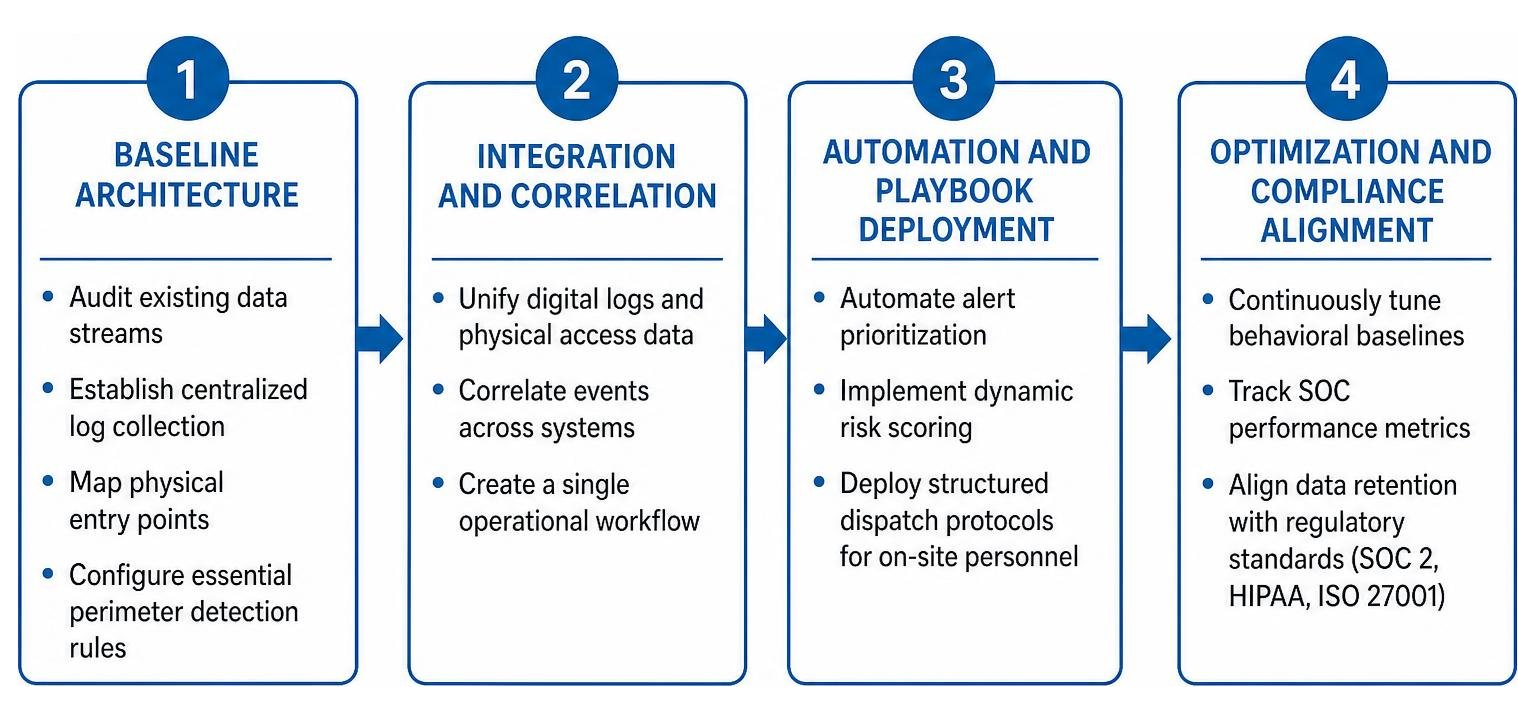
- Phase 1: Baseline Architecture: Audit existing data streams, establish centralized log collection, map physical entry points, and configure essential perimeter detection rules.
- Phase 2: Integration and Correlation: Unify digital logs and physical access data into a single operational workflow using enterprise integration monitoring strategies.
- Phase 3: Automation and Playbook Deployment: Introduce automated alert prioritization, dynamic risk scoring, and structured dispatch protocols for on-site personnel.
- Phase 4: Optimization and Compliance Alignment: Continuously tune behavioral baselines, track SOC performance metrics, and align data retention practices with regulatory standards such as SOC 2, HIPAA, or ISO 27001.
Frequently Asked Questions about Enterprise Security
How does continuous monitoring differ from periodic assessments?
Periodic assessments, such as annual risk audits or scheduled penetration tests, offer a point-in-time snapshot of an organization’s security posture. While valuable, they leave major blind spots during the weeks and months between reviews.
Continuous monitoring maintains active, 24/7 visibility across physical access systems, networks, and cloud environments. By reviewing signals in real time, automated systems and monitoring teams detect suspicious actions instantly, significantly reducing threat dwell time and allowing security teams to address issues before they disrupt operations.
What primary metrics evaluate monitoring performance?
Security teams measure their operational efficiency using several standardized performance indicators:
- Mean Time to Detect (MTTD): The average time that elapses between an unauthorized event occurring and the system flagging it.
- Mean Time to Respond (MTTR): The average duration required for security personnel or automated workflows to contain, mitigate, and resolve a verified incident.
- False Positive Ratio: The percentage of generated alerts that represent benign activity, indicating how well detection rules are tuned.
- Alert Triage Velocity: The speed at which incoming notifications are reviewed, categorized, and escalated by analysts or automated systems.
How should organizations manage third-party supply chain risks?
Third-party vendors, maintenance contractors, and cloud service providers frequently require access to corporate networks or physical facilities. If a vendor’s credentials become compromised, unauthorized parties can use those legitimate channels to gain access.
Organizations should enforce strict least-privilege access policies, requiring multi-factor authentication and unique badging credentials for all outside contractors. Furthermore, security teams should continuously assess third-party risk profiles, monitor external attack surfaces, and track threat intelligence sources for leaked credentials or compromised vendor access tokens.
Conclusion
Modern security demands continuous visibility across every corner of an enterprise. Relying on disconnected point solutions or infrequent audits leaves commercial facilities and digital environments exposed to fast-moving operational risks.
By unifying endpoint logs, cloud telemetry, advanced video analytics, and physical access systems, organizations build a cohesive operational picture. When paired with trained on-site officers and rapid response capabilities, enterprise leaders create a resilient operating environment that preserves asset value and builds lasting stakeholder trust.
Admiral Security delivers comprehensive security solutions tailored to modern commercial enterprises, blending professional uniformed personnel, state-of-the-art surveillance integration, and responsive security risk management. Learn how our team implements integrated risk management strategies to safeguard your facilities and keep your business running smoothly across Bethesda, MD, Richmond, VA, Miami, FL, Houston, TX, and beyond. Explore the authentic, logic-driven Admiral Advantage today.