

Choosing the Right Raleigh Security Companies for Your Facility
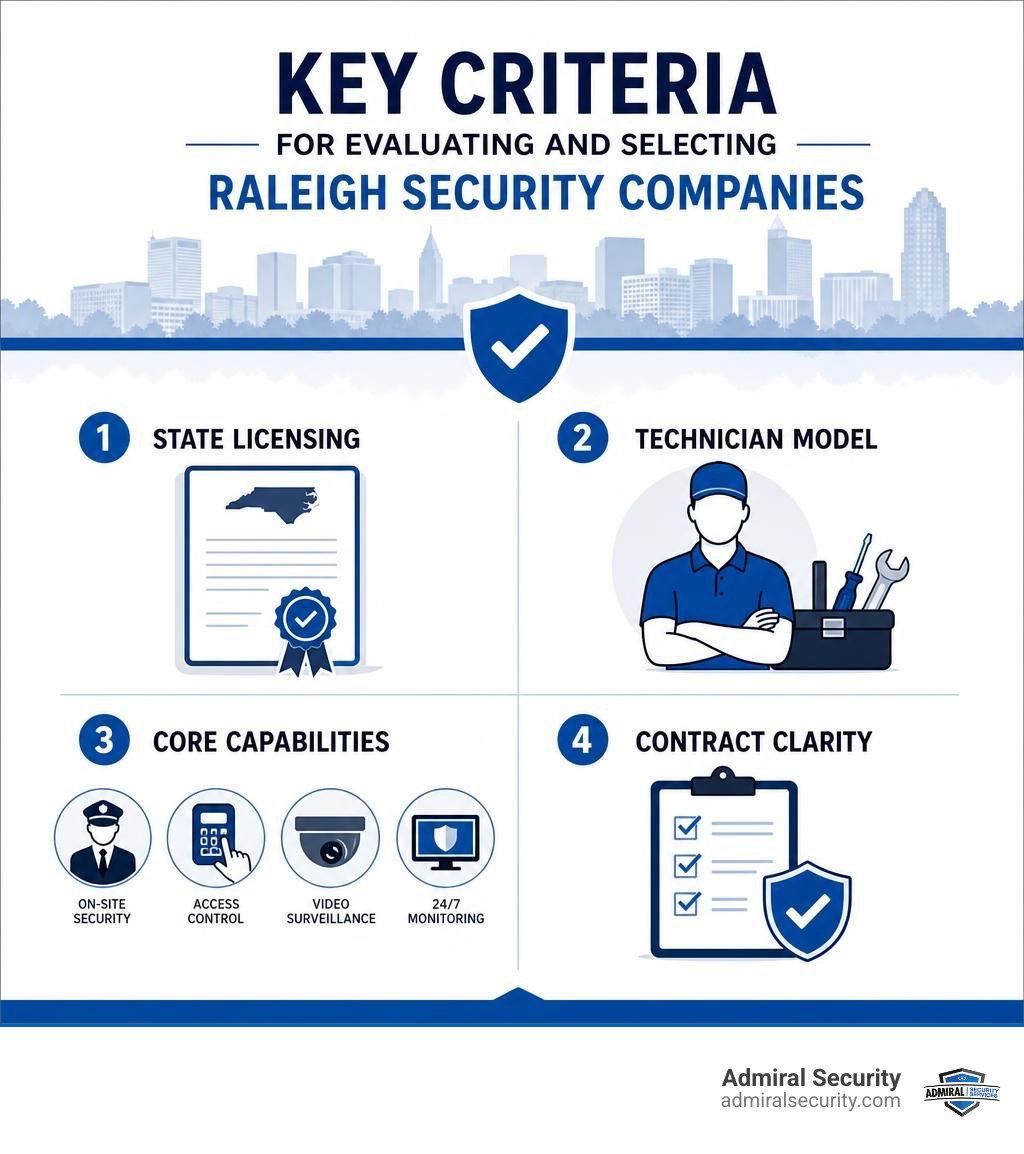
When evaluating raleigh security companies, the right choice comes down to four core criteria:
- State Licensing: Verify active credentials with the North Carolina Department of Public Safety and the State Board of Examiners of Electrical Contractors (SP-FA/LV).
- Technician Model: In-house, state-licensed technicians provide higher installation quality and consistent maintenance compared to third-party subcontractors.
- Core Capabilities: Choose providers that integrate uniformed on-site security, access control, smart video surveillance, and 24/7 central station monitoring.
- Contract Clarity: Avoid rigid auto-renewing agreements with hidden hardware fees or outsourced customer support call centers.
Wake County commercial executives and facility managers often face a choice between giant national brands and dedicated regional teams. While national chains offer name recognition, local specialists deliver faster dispatch coordination, clean structured wiring, and direct accountability from teams familiar with the Triangle market.
Evaluating Raleigh Security Companies: National Providers vs. Local Specialists
When I evaluate the security market across Raleigh and the greater Triangle area, the division between massive national conglomerates and focused regional firms stands out immediately. National security providers possess undeniable brand awareness, yet their scale often becomes a bottleneck for customer support and tailored service delivery.
Local providers deliver direct accountability. When you manage a commercial real estate asset in downtown Raleigh or an industrial campus in Research Triangle Park, dealing with an offshore call center during a false alarm escalation or hardware failure wastes valuable operational time. Regional teams maintain dedicated dispatch routes, build relationships with Wake County first responders, and assign account managers who understand local municipal codes.
To understand the broader landscape of security management, exploring The Ins and Outs of Security Companies can provide helpful clarity on operational structures.
| Feature / Metric | Local & Regional Specialists | National Security Conglomerates |
|---|---|---|
| Technician Employment | In-house, dedicated licensed staff | Frequently outsourced to 1099 contractors |
| Dispatch & Response | Direct local station routing | Centralized, multi-state clearinghouses |
| System Customization | Custom layout based on building architecture | Standardized, one-size-fits-all hardware packages |
| Contract Transparency | Direct terms with clear ownership | Multi-year auto-renewals with equipment liens |
| Customer Service | Assigned local account representatives | Tiered ticket systems and automated phone trees |
Essential Services Provided by Raleigh Security Companies
Modern enterprise defense requires more than a simple door sensor. Today, Raleigh facilities rely on comprehensive electronic and physical systems working in harmony.
Key technical and operational offerings include:
- Intrusion Detection Systems: Hardwired and wireless perimeter contacts, glass-break sensors, and motion detectors tied directly into central alarm panels.
- Commercial CCTV Surveillance: High-definition IP cameras equipped with edge analytics, license plate recognition, and night-vision capabilities.
- Door Access Control: Keycard, biometric, and mobile credential readers that establish strict entry permissions and produce searchable audit trails.
- Smart Building Automation: Automated scheduling for commercial lighting, commercial thermostat controls, and remote facility lockouts.
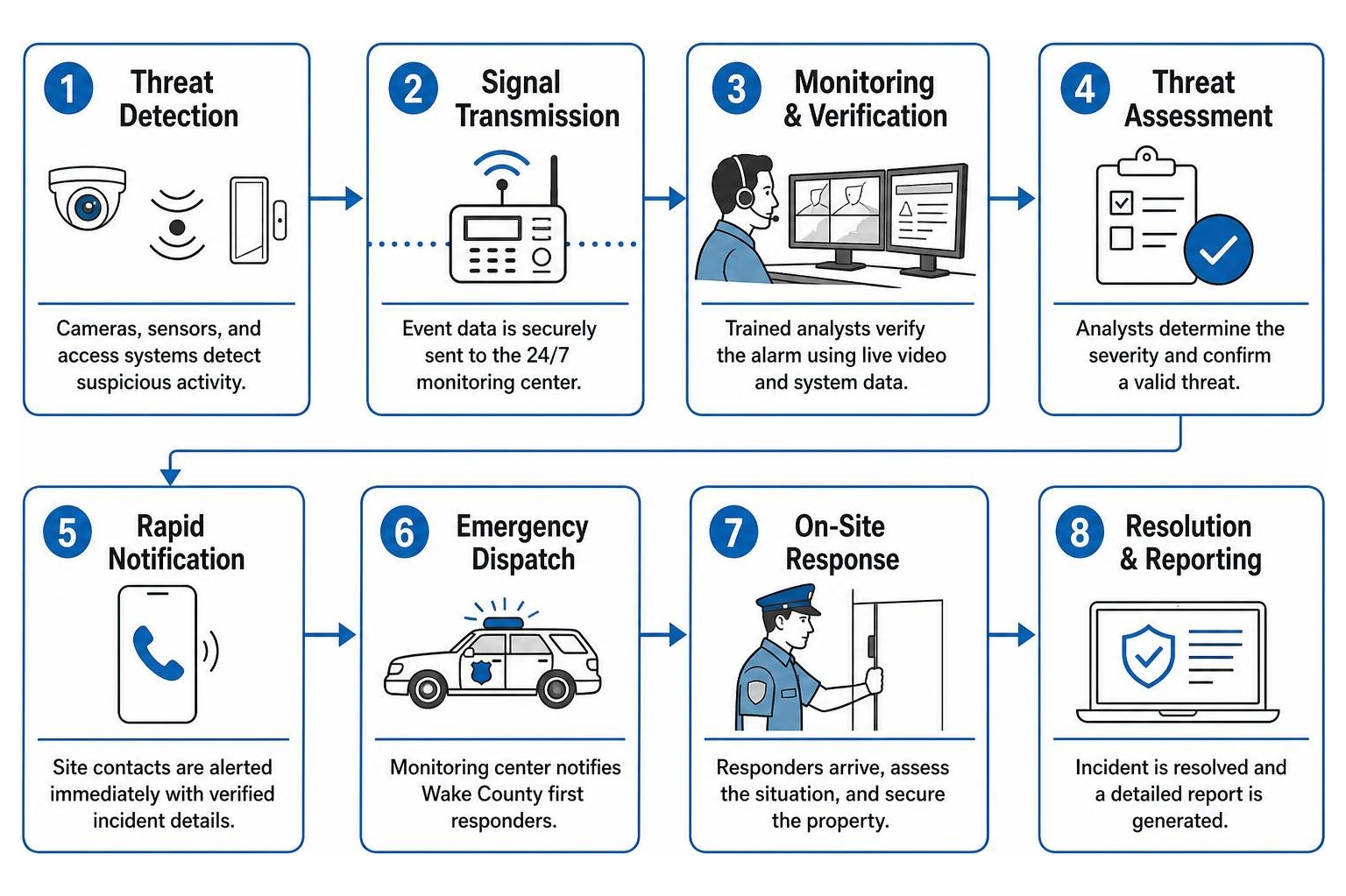
- 24/7 Professional Central Monitoring: Continuous remote supervision verifying real threats and notifying municipal dispatchers within seconds.
- Commercial Fire Alarm Integration: Regulatory-compliant heat, smoke, and waterflow detection integrated alongside intrusion hardware.
- Autonomous Perimeter Monitoring: Advanced surveillance platforms, including autonomous drone stations for expansive industrial sites and logistics yards.
In-House Technicians vs. Third-Party Subcontractors
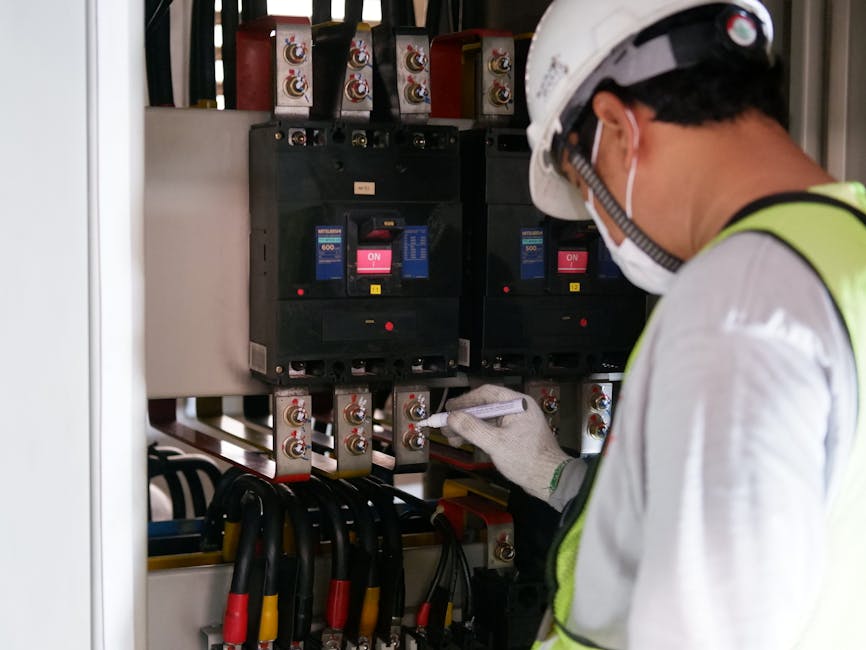
The technician who installs your low-voltage cabling and configures your access control network represents your true front line of defense. In my experience, one of the biggest differentiators among security firms is whether they employ 100% in-house, licensed technicians or outsource work orders to third-party subcontractors.
Subcontractor models introduce variability in craftsmanship. Subcontractors are typically paid per completed job, incentivizing fast, corner-cutting installations. In contrast, in-house technicians follow strict corporate installation standards. They handle structured low-voltage pre-wiring cleanly, secure main panels neatly, label every line accurately, and conduct end-to-end system walkthroughs with property managers before signing off on a project.
North Carolina Licensing and Regulatory Standards for Security Firms
In North Carolina, security installation and monitoring are strictly regulated to shield property owners from unqualified operators. Before signing an agreement or letting an installation crew onto your premises, verify that the organization complies with dual state licensing frameworks.
When vetting private agencies, reviewing Finding Your Shield: A Guide to Private Security Agencies serves as an excellent benchmark for professional standards.
North Carolina mandates two primary credentials:
- North Carolina Department of Public Safety (NCDPS) Alarm Systems Licensing Board: This board oversees businesses that sell, install, and service alarm systems. It requires rigorous background checks, fingerprinting, and proven industry competency for all operating personnel.
- North Carolina State Board of Examiners of Electrical Contractors: Security cabling, intrusion panels, and integrated power supplies require a specialized low-voltage electrical license, specifically the SP-FA/LV (Special Single Class – Fire Alarm and Low Voltage) designation.
Beyond state credentials, look for Better Business Bureau (BBB) accreditation. An A+ rating with a documented track record of resolving customer inquiries reflects a company dedicated to ethical business practices and reliable service.
Contract Terms, Pricing Transparency, and Common Industry Pitfalls
Navigating security agreements requires a sharp eye. Many commercial clients find themselves locked into restrictive, multi-year monitoring agreements containing aggressive auto-renewal clauses and ambiguous equipment ownership terms.
To see how responsive providers manage transparency in major markets, examine How to Choose a Responsive Security Company in Houston.
How Raleigh Security Companies Structure Contracts and Pricing
Security system investments typically fall into two main components: upfront capital expenditure for hardware installation, and recurring operational costs for monitoring and software maintenance.
- Open-Platform vs. Proprietary Hardware: Proprietary equipment binds your property to a single provider. If you decide to switch monitoring vendors, proprietary panels must be completely replaced at high expense. Always insist on open-platform hardware that can be reprogrammed by any licensed technician.
- Monitoring Tiers: Basic monitoring covers simple digital dialer communication, while advanced commercial monitoring incorporates cellular backup, video alarm verification, and direct access control server hosting.
- Maintenance Agreements: Comprehensive service level agreements (SLAs) cover routine sensor testing, camera lens cleaning, firmware updates, and rapid on-site technician response times.
For those overseeing commercial facilities, evaluating specialized security setups via Top Commercial Security Guards in Houston for Every Business Type provides useful context on holistic facility safety.
Avoiding Deceptive Sales Tactics and Billing Disputes
The security sector has occasionally suffered from high-pressure sales models. Aggressive door-to-door reps may claim your current provider has gone out of business, or sneak automatic five-year renewal extensions into fine print.
Ensure that billing management processes are clear. Corporate clients should have streamlined invoicing that clearly separates cellular line maintenance, central station fees, and hardware warranty charges. Always check verified customer feedback to ensure the vendor resolves administrative inquiries promptly.
Core Capabilities to Demand for Residential and Commercial Defense

When designing a comprehensive facility plan, physical security and electronic surveillance must reinforce each other. Relying entirely on automated cameras without trained personnel creates gaps, while physical guards without intelligent electronic access systems lack real-time visibility.
For a deeper look into the operational structure of professional guard services, refer to A Deep Dive into Private Security Guard Companies in Houston Texas.
Key capabilities every facility manager should require include:
- Central Station Redundancy: Continuous 24/7 central monitoring backed by redundant power and server networks, ensuring alarms never go unacknowledged during severe weather or grid failures.
- AI-Powered Video Analytics: Camera systems that differentiate between human movement, vehicles, and harmless environmental triggers, drastically reducing false alarm dispatches.
- Detailed Audit Logging: Access control systems that maintain precise time-stamped logs of every door presentation, denied entry, and forced-door event.
- Pre-Construction Structured Cabling: Planning low-voltage infrastructure during the pre-construction phase to ensure all drops for access control, cameras, and intercoms are seamlessly integrated into the building architecture.
Frequently Asked Questions About Raleigh Security Services
What state licenses are required for security system installation in North Carolina?
Security contractors in North Carolina must hold an Alarm Systems License issued by the North Carolina Department of Public Safety Alarm Systems Licensing Board. Furthermore, to legally run low-voltage wiring and install power panels, companies must carry an electrical contractor license with the SP-FA/LV classification issued by the North Carolina State Board of Examiners of Electrical Contractors.
What are the benefits of 24/7 professional alarm monitoring?
Professional monitoring connects your facility to a certified central station staffed round the clock by trained dispatch operators. When an alarm triggers, the station verifies the alert, filters out accidental activations, and instantly contacts local emergency personnel in Wake County, significantly reducing dispatch times and limiting potential facility damage.
Why is structured pre-wiring important during new building construction?
Installing low-voltage structured cabling before drywall is placed creates a robust physical backbone for your entire building network. It eliminates the need for expensive surface-mounted conduit or wireless extenders later, future-proofing your facility for future expansions in CCTV, door access readers, and building automation controllers.
Conclusion
Securing your commercial property, personnel, and physical assets requires a calculated approach that blends state-of-the-art technology with dependable human oversight. Raleigh continues to expand as a dynamic economic center, making proactive risk mitigation essential for commercial enterprises, industrial facilities, and residential communities alike.
At Admiral Security, I take pride in delivering comprehensive security programs built on authentic relationships, sound operational logic, and genuine responsiveness. By combining trained uniformed personnel, advanced electronic systems integration, and dedicated security risk management, we help facility managers maintain stable, secure environments day in and day out.
To explore our services across Raleigh, Greensboro, and our regional service hubs, connect with our team through our locations page today.