

When Do Vet Clinics Need Security Guards?
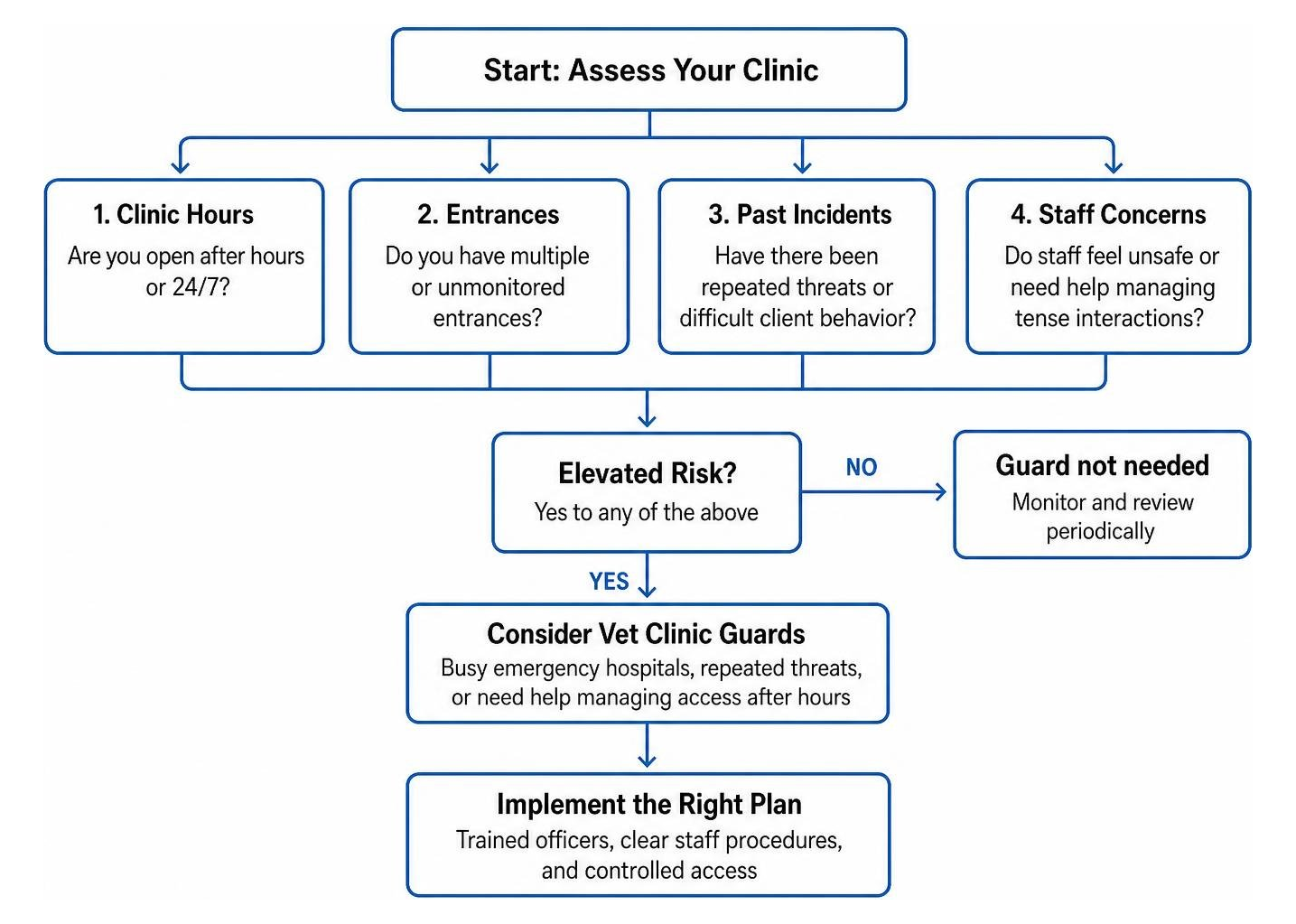
Most vet clinics do not need a guard on site at all times. Vet clinic guards make more sense for busy emergency hospitals, clinics with repeated threats, or facilities that need help managing access after hours. If you are looking for guards, start with a review of your clinic’s hours, entrances, past incidents, and staff concerns. Then ask how officers will handle tense client interactions while keeping the front desk welcoming.
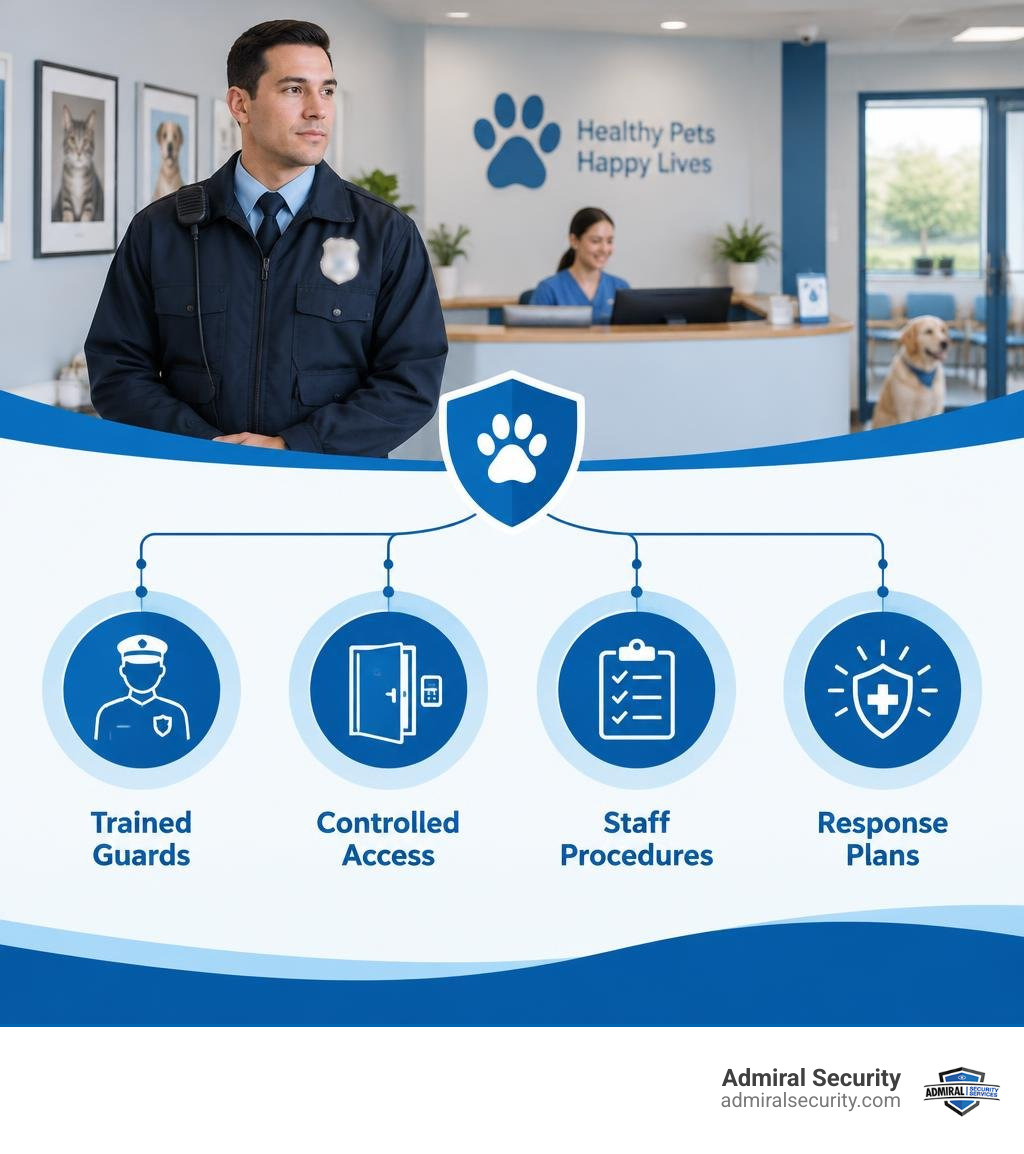
Admiral Security provides trained, uniformed officers, security risk management, and tech integration. The right plan pairs a calm human presence with clear staff procedures and controlled access, rather than treating a guard as the only answer.
Relevant articles related to vet clinic guards:
Why Animal Hospitals Deploy Vet Clinic Guards
When pet owners walk into a clinic, they often carry fear, grief, and intense anxiety. Animal hospitals serve as high-stress medical environments where emotions run high, particularly during overnight shifts. Veterinary teams focus on saving lives, yet they frequently manage difficult client behavior and property vulnerabilities without dedicated assistance. Many clinic directors ask practical questions regarding safety, such as whether vet hospitals have security guards. The reality is that deployment depends on key risk factors, traffic patterns, and physical layout.
High-traffic veterinary centers and 24-hour emergency practices in urban locations face unique operational challenges. A steady stream of visitors at 2:00 AM creates genuine exposure for veterinary technicians and reception staff. Dark parking lots, secondary delivery entrances, and unmonitored waiting rooms make facilities vulnerable to unauthorized entry. Many administrators rely on practical security officer services to establish a reliable physical presence. Having a professional stationed on site preserves order, supports after-hours operations, and deters opportunistic crime before it reaches treatment spaces.
Core Responsibilities of Professional Vet Clinic Guards
A professional security officer within an animal hospital does much more than stand by the door. Their primary task involves maintaining a steady, reassuring front-desk presence. They observe incoming visitors, assist front-desk personnel with visitor check-in procedures, and spot signs of agitation early. When arguments erupt over triage priority or payment terms, trained officers use verbal de-escalation strategies to stabilize the situation before it turns physical.
In addition to de-escalation, officers maintain perimeter patrols and enforce access control policies across all facility doors. They conduct after-hours escorts for veterinarians and nurses walking to their vehicles late at night. By managing building entry and maintaining clear incident documentation, these professionals support staff wellbeing while securing valuable practice assets from loss.
Specialized Coverage for Exotic and High-Value Animal Facilities
Facilities that house rare, exotic, or high-value breeding animals face risks that standard companion animal clinics rarely encounter. Specialized zoological centers, equine hospitals, and specialty avian clinics require rigorous theft deterrence and strict bio-security oversight. Unauthorized individuals entering quarantine zones or specialized enclosures can introduce pathogens or cause severe distress to delicate species.
On-site officers monitor secure enclosures, track visitor logs, and verify that only credentialed veterinary staff enter restricted wards. Through continuous perimeter monitoring, rapid incident reporting, and active surveillance oversight, dedicated officers help veterinary directors safeguard unique animals against unauthorized handling, malicious release, or intrusion.
Critical Security Vulnerabilities in Modern Veterinary Practices
Veterinary practices face rising operational friction. High client volumes, extended emergency wait times, and financial stress often lead to volatile confrontations at the reception counter. A concerning report on rising client aggression emphasizes how frequent verbal abuse and aggressive behavior take a heavy toll on care teams.
The pressures of veterinary medicine create serious mental health concerns. The suicide rate in the veterinary industry is four times the national average. When medical teams constantly absorb hostility from frustrated pet owners during triage delays, staff burnout accelerates, leading to high turnover. Establishing solid physical security protocols helps remove the burden of dispute management from clinical staff, allowing them to concentrate entirely on patient care.
Controlling Prescription Drug Diversion and Internal Theft
Veterinary pharmacies house substantial inventories of controlled substances, including Schedule II sedatives, opioids, and anesthetics. Because these pharmaceuticals carry high street value, clinics represent frequent targets for external burglary and internal diversion. Practicing veterinarians must follow strict Drug Enforcement Administration guidelines, using established compliance protocols to track every milliliter of medication.
As much as 10% of losses in a veterinary practice are the result of employee theft. Reducing this risk requires structured physical and administrative controls:
- Storing all Schedule II through V drugs in heavy, double-locked steel safes secured to the building structure.
- Enforcing strict role-based electronic access so only authorized personnel open drug storage areas.
- Keeping detailed, real-time dispensing logs and reconciling counts weekly to detect anomalies immediately.
- Conducting background verification during the hiring process to maintain workplace integrity.
Preventing Burglary, Robbery, and Cash Loss

Animal hospitals frequently experience after-hours burglary attempts aimed at retail inventory, surgical equipment, and cash drawers. Clinics that maintain large amounts of cash in registers make themselves easy targets for opportunistic theft. Following practical veterinary security guidelines helps practice managers harden their facilities against forced entry.
Simple environmental adjustments dramatically lower criminal opportunity. Keeping register cash under fifty dollars and dropping excess funds into secure drop safes minimizes cash loss during an incident. Outside the facility, trimming landscaping within six feet of entryways eliminates hiding spots, while high-output LED fixtures illuminate parking lots and walkways. Ensuring reception staff maintain clear sightlines to the main parking area allows teams to see approaching visitors well before they reach the door.
Defending Digital Records Against Ransomware and Cyber Threats
Modern clinics rely heavily on practice management software, digital radiography databases, and cloud-based client accounts. A small or mid-sized clinic is attractive to cybercriminals because it often lacks advanced digital defenses. Ransomware attacks can encrypt client records, medical histories, and payment portals, bringing operations to a sudden halt.
A comprehensive cybersecurity guide highlights the need for robust technical and physical safeguards to maintain data integrity. Clinics must secure personally identifiable information and maintain PCI DSS compliance for electronic payments. Segmenting clinic Wi-Fi networks prevents unauthorized devices on guest connections from reaching sensitive servers. Maintaining encrypted offline backups and training staff to recognize phishing scams ensures continuity of care if digital systems encounter an intrusion attempt.
Multi-Layered Safety Measures to Support Staff and Patients
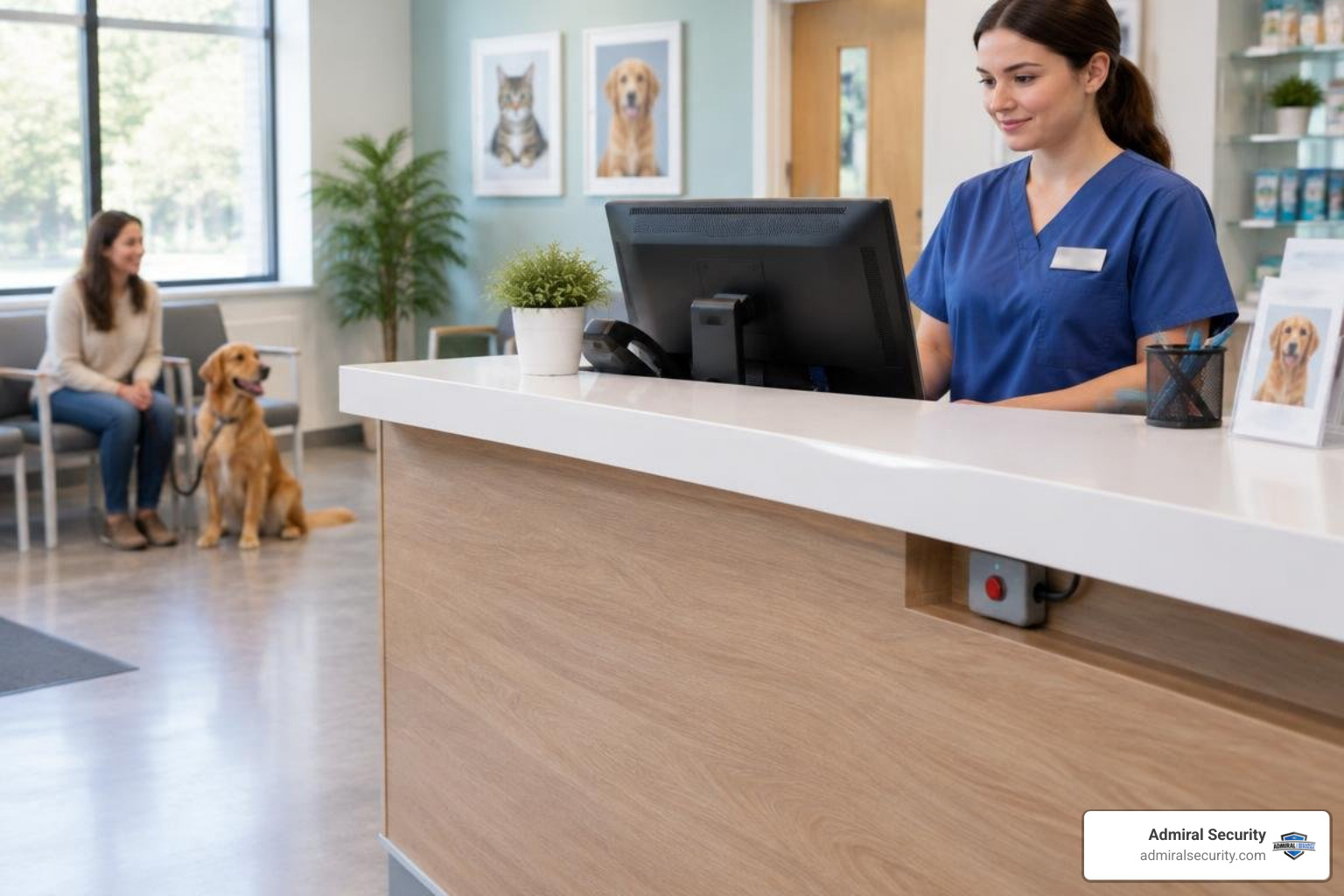
A truly secure clinic relies on integrated safety layers rather than a single physical barrier. In his analysis on the real purpose of security in a veterinary hospital, industry safety expert Philip Seibert explains that effective safety blends daily procedures, physical hardware, early warning alerts, and reliable methods for summoning help.
| Security Layer | Core Implementation | Operational Benefit |
|---|---|---|
| Procedural Controls | Visitor check-in, two-person shift rules, locked secondary doors | Prevents unauthorized wandering and limits opportunism |
| Physical Barriers | Magnetic door locks, impact-resistant glass, secure counters | Delays intrusion attempts and shields frontline staff |
| Early Warning | Door chimes, exterior CCTV with motion alerts, angled mirrors | Gives staff crucial seconds to assess approaching visitors |
| Emergency Support | Hardwired panic buttons, silent alarms, dedicated safe rooms | Enables immediate, discreet notification for rapid assistance |
When fixed, full-time guards are not practical for a smaller clinic, partnering with mobile security patrol services provides a visible deterrent. Scheduled and randomized drive-by checks during late evening hours ensure doors remain secured, parking areas stay clear, and staff feel supported during shift changes.
Managing Aggressive Clients While Maintaining a Welcoming Atmosphere
Veterinary reception areas need to remain compassionate spaces where pet owners feel supported during painful moments. Establishing firm security boundaries does not require transforming a reception lobby into an unwelcoming fortress. Balancing warmth with clear rules starts with front-desk communication training.
- Clear, Empathetic Signage: Post tasteful signs outlining clinic values, respectful communication guidelines, and zero-tolerance policies regarding verbal abuse or aggressive behavior.
- De-Escalation Training: Teach receptionists to use low, calm vocal tones, acknowledge client frustration, and avoid confrontational postures when explaining wait times.
- Structured Comfort Measures: Provide comfortable seating, accessible water, and regular updates on patient status to reduce waiting-room anxiety.
- Discreet Alarm Access: Equip reception desks with hidden panic triggers so staff can request help without escalating client hostility.
Evaluating the Cost and Return of On-Site Security Personnel
Investing in security personnel represents a meaningful operational expenditure, but the return on investment surfaces across multiple areas of practice operations. Having dedicated personnel reduces property loss, supports staff retention, and lowers liability risks associated with workplace altercations.
| Security Model | Best Application | Key Advantages | Cost Considerations |
|---|---|---|---|
| Dedicated On-Site Guards | 24/7 emergency hospitals, high-volume urban facilities | Immediate physical response, continuous de-escalation, after-hours escort | Higher direct investment; offset by reduced turnover and loss prevention |
| Mobile Patrols | Day clinics, suburban practices, closed overnight facilities | Visible exterior presence, random perimeter checks, physical door verification | Budget-friendly option; provides periodic coverage rather than continuous support |
| Access Control & Tech | All practices regardless of size or geographic location | Automated entry logs, restricted drug room access, remote monitoring | Upfront hardware investment with minimal ongoing operational costs |
When selecting security staff, vetting qualified security personnel ensures that officers possess the emotional intelligence required for medical environments. Officers who understand client distress help preserve customer trust while maintaining absolute safety across the facility.
Frequently Asked Questions About Veterinary Security
Do small veterinary clinics need dedicated security guards?
Small, daytime veterinary clinics rarely require a permanent, on-site security guard. For these practices, implementing robust access control systems, magnetic locks on staff doors, high-definition security cameras, and clear opening and closing procedures offers reliable safety. If a daytime practice operates in an area with elevated property crime or experiences recurring disputes, contracting a mobile patrol service during opening and closing hours delivers practical peace of mind without the expense of a full-time officer.
How can veterinary clinics secure controlled substances from diversion?
Clinics must store all Schedule II through V controlled substances inside a securely mounted, double-locking steel safe or heavy cabinet. Access keys or digital keypad codes should remain restricted to licensed veterinarians and authorized head technicians. Practices should implement real-time digital logs that record the date, patient name, dosage administered, prescribing doctor, and remaining balance for every transaction. Conducting weekly physical counts and performing unannounced internal audits ensures any discrepancies are discovered and addressed immediately.
What should staff do when a pet owner becomes verbally abusive or violent?
When a client becomes verbally aggressive, staff should maintain a calm, professional demeanor, step back to keep physical distance, and avoid arguing. Staff members should clearly state clinic boundaries using steady, respectful language. If the individual continues to escalate or makes physical threats, employees should immediately disengage, retreat to a secure, lockable staff area or safe room, and activate a silent panic button to summon emergency assistance. Staff should never attempt to physically restrain an angry visitor.
Conclusion
Creating a secure veterinary practice allows medical professionals to deliver compassionate clinical care without fear of workplace hostility or property loss. By combining trained security officers, modern access technology, comprehensive staff protocols, and proactive security risk management, clinic owners can build a resilient environment that supports both employees and visiting pet owners.
Admiral Security supports healthcare and veterinary facilities with reliable, professional security programs designed around your operational needs. To learn how our team can support your facility, explore our tailored business guarding solutions or speak with us about our uniformed security personnel and security risk management services. Let us help you maintain a safe, welcoming clinic where your team and patients thrive.