

Defining Modern Security Officer Services Beyond Basic Physical Presence
Finding dependable security officer services requires evaluating provider licensing, operational vetting standards, real-time technology integration, and customer-focused communication. Beyond a basic physical presence, enterprise security demands proactive engagement. Security personnel must manage access points seamlessly, uphold your brand image, resolve disputes peacefully, and mitigate operational disruptions before they escalate.
Security officers frequently act as the initial point of contact for clients, visitors, and employees. Their demeanor sets the tone for your brand. When officers maintain an approachable yet vigilant posture, they build safety into everyday visitor interactions. Achieving this standard requires rigorous screening, structured leadership, and continuous education. For organizations establishing new standards, The Ultimate Guide to Finding Trusted Security Service Providers outlines foundational strategies to identify dependable teams.
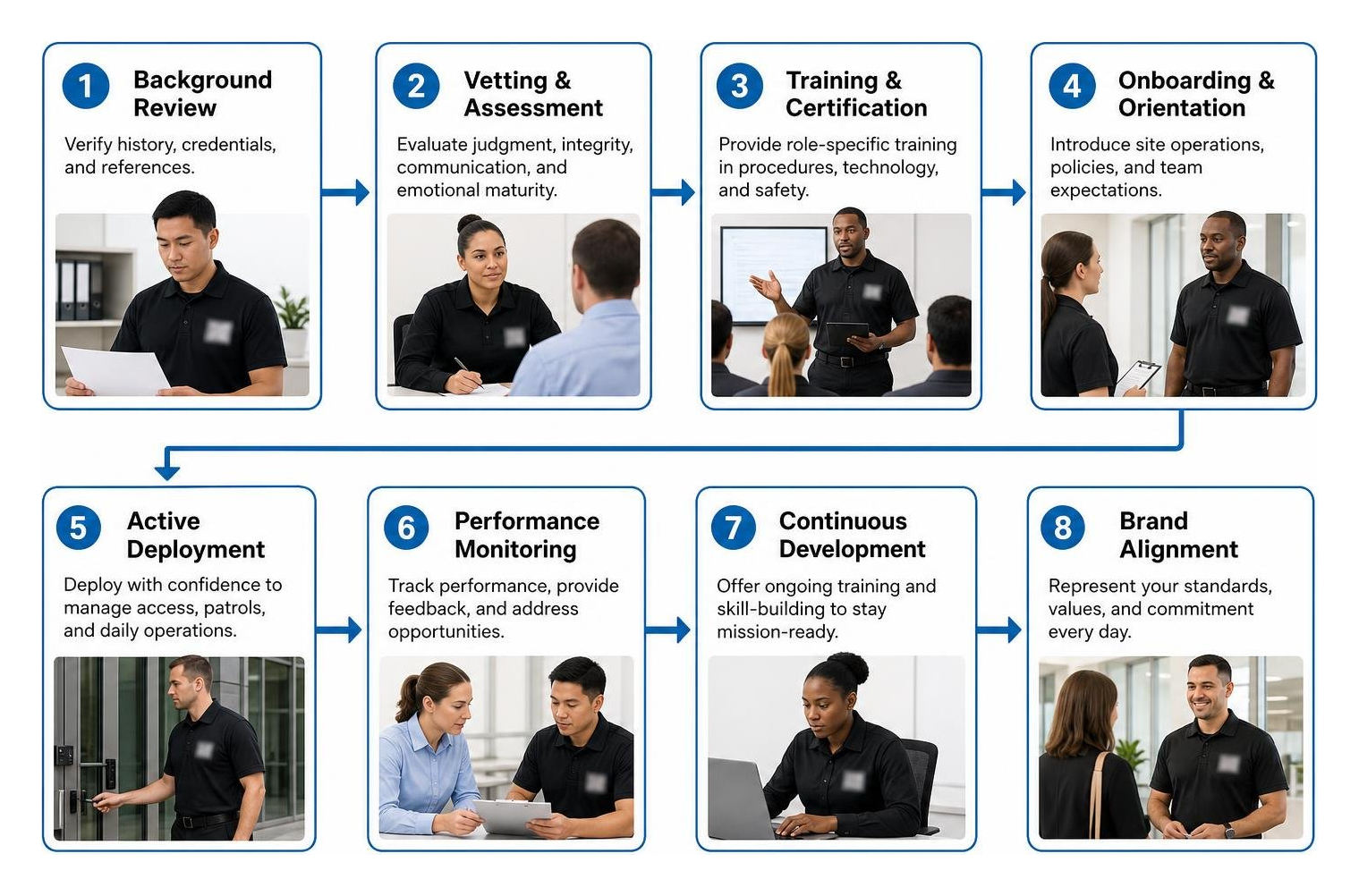
A high-performing program also requires clear hiring criteria and ongoing operational assessments. By consulting The Essential Guide to Vetting Your Security Personnel, security directors can verify that candidates possess technical competence, emotional maturity, and the judgment needed for complex enterprise environments.
Core Capabilities of Enterprise Security Officer Services
Enterprise-grade operations need security personnel who integrate smoothly with daily facility workflows. Today’s officers conduct comprehensive perimeter patrols, manage advanced visitor screening consoles, coordinate emergency response plans, and deliver welcoming guest hospitality.
Rather than simply observing, trained personnel evaluate anomalies, guide building occupants during incidents, and maintain comprehensive digital audit logs to enhance organizational accountability.
| Operational Dimension | Traditional Guard Presence | Comprehensive Security Officer Services |
|---|---|---|
| Primary Objective | Passive observation and visual deterrence | Active access management, threat identification, and client service |
| Technology Integration | Manual paper logbooks and basic radios | Real-time digital reporting, sensor telemetry, and intelligence feeds |
| Incident Response | Basic observation and post-incident reporting | Active de-escalation, rapid containment, and coordinated emergency execution |
| Brand Alignment | Detached physical presence | Concierge-level interaction and positive brand ambassadorship |
| Risk Focus | Reacting after a disturbance occurs | Continuous security risk management, early intervention, and prevention |
Specialized Support Across Critical Sectors
Different industries face distinct operational hazards, requiring tailored deployment models:
- Commercial Real Estate: High-rise corporate office towers in major metropolitan centers such as Houston, Boston, and Miami require security staff who combine professional hospitality with vigilant turnstile oversight. You can explore sector-specific strategies in Top Commercial Security Guards in Houston for Every Business Type.
- Healthcare Facilities: Hospitals and medical clinics present dynamic, stressful environments. Personnel must use proven de-escalation techniques while maintaining physical access boundaries in emergency wings and patient recovery areas.
- Industrial Logistics and Warehousing: Large-scale supply chain nodes demand strict perimeter checks, cargo bay management, and asset loss mitigation. For in-depth methodologies, see The Industrial Warehouse Security Company Guide to Asset Security.
- Educational Campuses: Academic centers require a welcoming, approachable atmosphere that preserves campus life while sustaining strong access control and immediate emergency response protocols.
- Retail Environments: Commercial storefronts benefit from loss-prevention professionals who deter shoplifting, assist customers, and maintain a calm shopping environment.
Integrating Personnel with Next-Generation Intelligence and Risk Platforms
Human vigilance increases in value when supported by real-time intelligence. At Admiral Security, on-site personnel work alongside modern data platforms to turn raw telemetry into actionable insights across commercial properties.
Our operations integrate the Guardian intelligence platform, which aggregates 247 real-time feeds with a validated precision rate above 93%. Driven by the Cortex triage engine, the system operates with a median latency of 217 milliseconds. This speed allows personnel to receive notifications about security risks, severe weather alerts, or regional transit disruptions as they happen.
To understand how modern hardware and software coordinate with staff on site, review the capabilities detailed under our Technology framework.
Complementing this system, our Watchtower risk console ingests information from 13,247 public sources every minute, covering more than 40 countries. This platform flags emerging situations, filters out false reports, and notifies on-duty officers before regional disturbances reach your facility perimeter.
Real-Time Incident Mitigation in Security Officer Services
When automated systems detect an anomaly, seconds count. Real-time telemetry, automated digital alerts, and GPS-verified personnel tracking allow dispatch supervisors to deploy nearby officers quickly and efficiently.
Digital incident logs replace paper notebooks, giving facility managers real-time updates and clear audit trails for insurance and compliance needs. By leveraging Integration Monitoring, companies can coordinate their physical security teams with electronic access hardware, CCTV cameras, and environmental alarms into one unified operating view.
Specialized Crisis Response and Global Risk Capabilities
Enterprise security programs must prepare for high-impact disruptions. Through our partnership with Talos Services Group, Consultation and Crisis Response, Admiral delivers global security risk management and crisis response capabilities.
Backing these operations are 12 capability lines and 3 interlocking disciplines:
- Field Security and Asset Support: Structured personnel deployment, residential security planning, and travel advance programs.
- Strategic Consultation: Detailed security threat assessments, infrastructure design, and corporate security policy planning.
- Crisis Response: Rapid evacuation coordination, emergency response deployment, and business continuity restoration.
Supported by seasoned specialists with decades of combined experience across dozens of countries, our dedicated security Risk Management solutions help businesses stay resilient against unexpected disruptions.
Key Evaluation Standards: Training, Compliance, and Industry Recognition
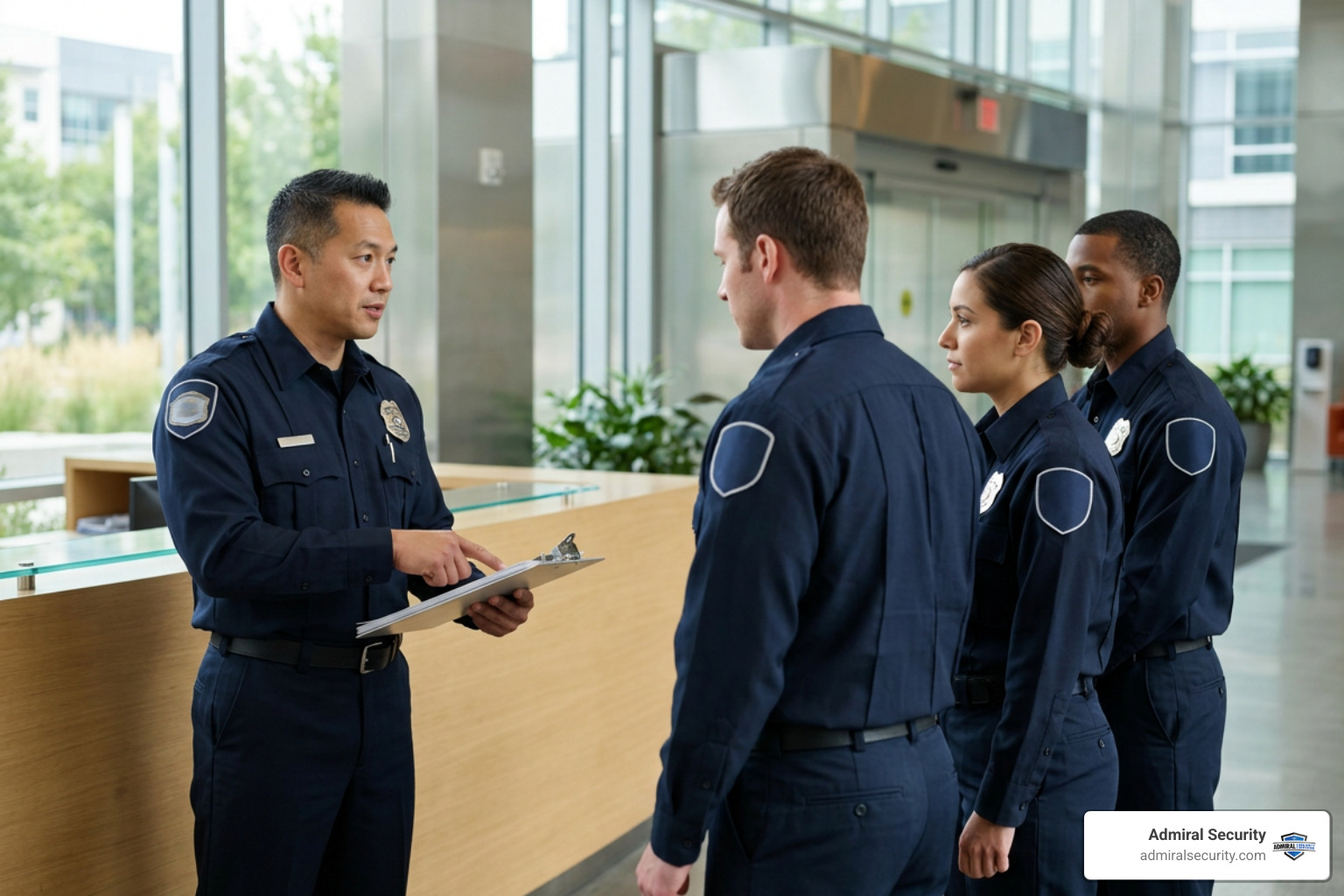
Selecting an enterprise security partner requires looking beyond basic marketing claims to verify operational standards. I always advise evaluating independent accreditations, regional state licensing compliance, and internal employee training programs.
Industry recognition from respected organizations like ASIS International serves as an objective measure of service quality. Admiral Security holds multiple honors, including the ASIS Organizational Award of Merit, the Meritorious Service Award, and recognitions for Customer Service and Leadership.
To evaluate potential providers systematically, consult the Buyers Guide Best Security Officers for 2026 along with The Definitive Guide to Security Training Services.
Professional Vetting and Brand Representation Protocols
Maintaining a reliable security team depends on rigorous vetting. Trustworthy providers look beyond simple background checks, evaluating verbal de-escalation skills, situational awareness, and customer-service readiness.
Reliable deployment systems ensure officers arrive on time, maintain pristine uniforms, and carry out post orders accurately. For a step-by-step review of standard vetting procedures, read Don’t Get Caught Off Guard Hiring Vetted Security Officers.
The Value of Authenticity, Logic, and Empathy in Operational Culture
The Admiral Advantage centers on three key principles:
- Authenticity: Fostering direct, transparent relationships between our management team, frontline officers, and client points of contact.
- Logic: Applying clear, structured security risk management strategies to resolve facility safety issues.
- Empathy: Treating visitors with dignity, understanding client operational needs, and supporting our frontline staff so they remain engaged in their roles.
When security personnel feel valued and well-supported, turnover drops, and service quality stays consistent across client properties.
Case Study: Implementing Integrated Security for Complex Operations
A multi-tenant corporate real estate campus faced operational challenges. The facility experienced recurring unauthorized access in subterranean parking decks, inconsistent guard staffing from a prior vendor, and communication delays during after-hours emergencies.
I guided the rollout of an integrated security plan across the campus:
- The Deployment: We stationed vetted, customer-oriented uniformed officers at main public lobbies and key access portals, backed by mobile patrols for the parking structures.
- Technology Integration: We connected on-site teams with our Watchtower intelligence console and mobile incident-reporting software, replacing old paper logs with real-time digital tracking.
- The Result: Over the first 180 days, unauthorized access attempts dropped by 42%. Incident response times improved by 65%, and the campus achieved a 100% on-time shift fill rate across all operating locations.
Frequently Asked Questions About Security Officer Services
What core duties should modern security personnel handle beyond patrol?
Beyond regular foot patrols, modern officers manage digital visitor access, screen credentials, assist guests, defuse interpersonal conflicts, provide first aid during emergencies, and submit real-time digital incident reports.
How does advanced intelligence software improve on-site guard performance?
Intelligence software provides field teams with early warnings about regional transit disruptions, severe weather, or nearby civil disturbances. Sub-second data triage allows officers to adjust building access parameters and secure perimeters before potential disruptions impact the site.
What credentials and certifications indicate a top-tier security provider?
Look for providers with relevant state licensing, active industry certifications, and peer-reviewed honors, such as ASIS International awards. A dependable provider should also demonstrate clear continuing education programs in de-escalation, emergency coordination, and digital reporting tools.
Summary of Enterprise Security Services
Securing commercial facilities requires a balanced combination of trained personnel, strategic planning, and modern technology. Through the Admiral Advantage framework, we connect reliable security risk mitigation with genuine, empathetic customer service.
Whether managing a busy office campus, a distribution center, or a specialized healthcare facility, partnering with dedicated professionals keeps your daily operations running smoothly.
Connect with our team to discover how our Uniformed Personnel can strengthen your facility’s safety and operational resilience.