

Why Background Checks Matter When Hiring Top Rated Security Services
For a commercial facility, I would judge top rated security services by how they screen officers, train them for the site, and respond when something goes wrong. Before hiring, I would ask for the guard screening process, confirm license requirements, and review how supervisors check attendance and incident reports. A high rating alone does not show who will be at the front desk or how they will handle an access issue.
Background checks are the starting point. They help me assess whether an officer is qualified for a role that involves people, property, and sensitive areas. Clear post orders, respectful conduct, and reliable oversight matter just as much.
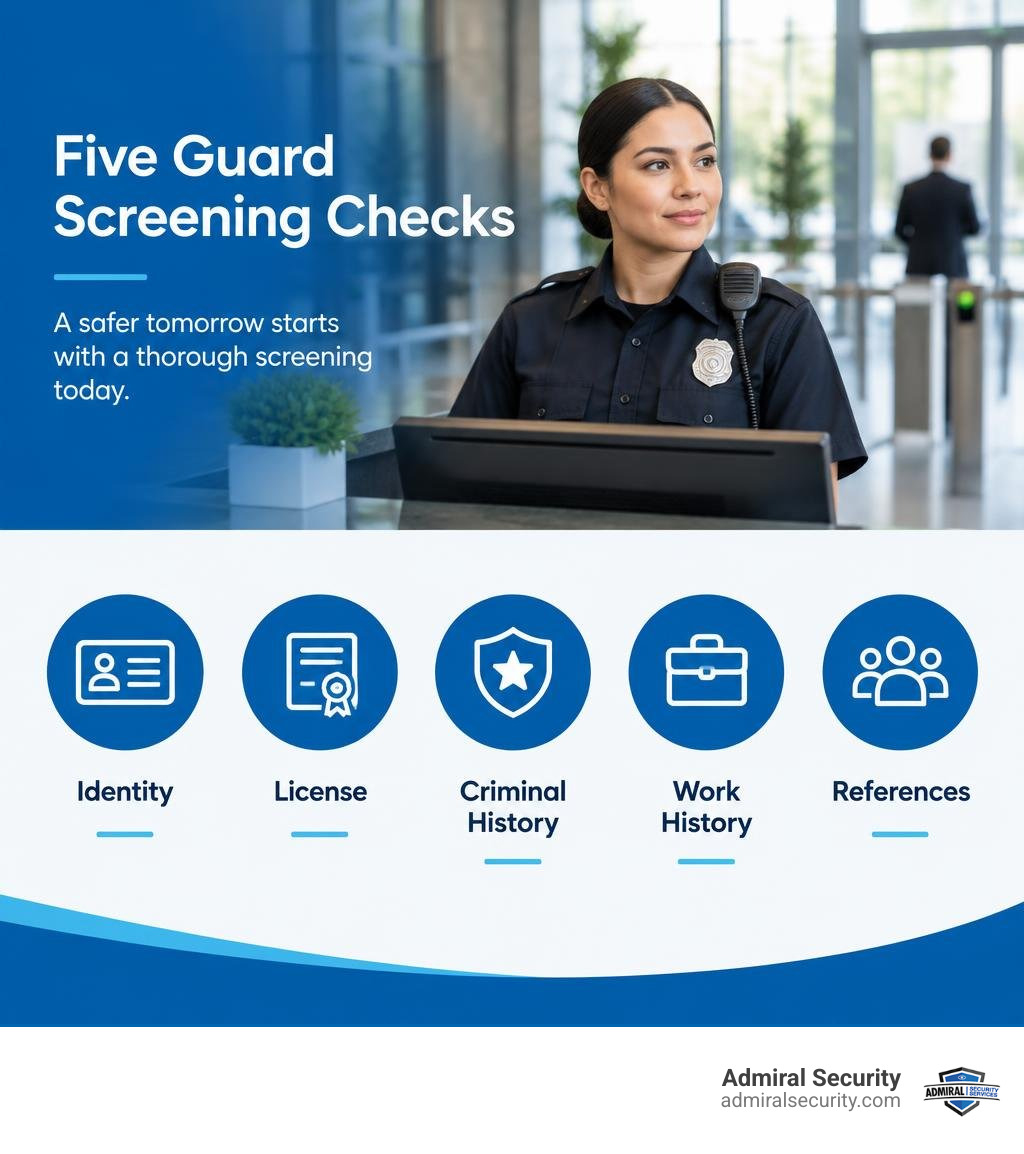
Top rated security services basics:
Evaluating Top Rated Security Services for Commercial Facilities

When I evaluate security management for commercial properties in major markets like Boston, Bethesda, Richmond, and Houston, I focus on the operational infrastructure behind the personnel. High scores and positive client reviews reflect daily operational discipline rather than marketing claims. Commercial real estate assets require vendor vetting processes that align with corporate compliance standards and security risk management goals.
I look closely at how a company manages staff turnover, post order compliance, and supervisor-to-officer ratios. In commercial settings, security officers act as the primary point of contact for employees, visitors, contractors, and delivery personnel. A gap in vetting directly exposes an enterprise to premises liability, confidential data exposure, and facility disruptions.
How Top Rated Security Services Screen and Vet Officers
A solid vetting framework operates across multiple distinct phases before an individual ever receives a site placement. The initial stage requires multi-jurisdictional criminal history checks covering county, state, and national databases. This step uncovers past offenses that could compromise commercial environments.
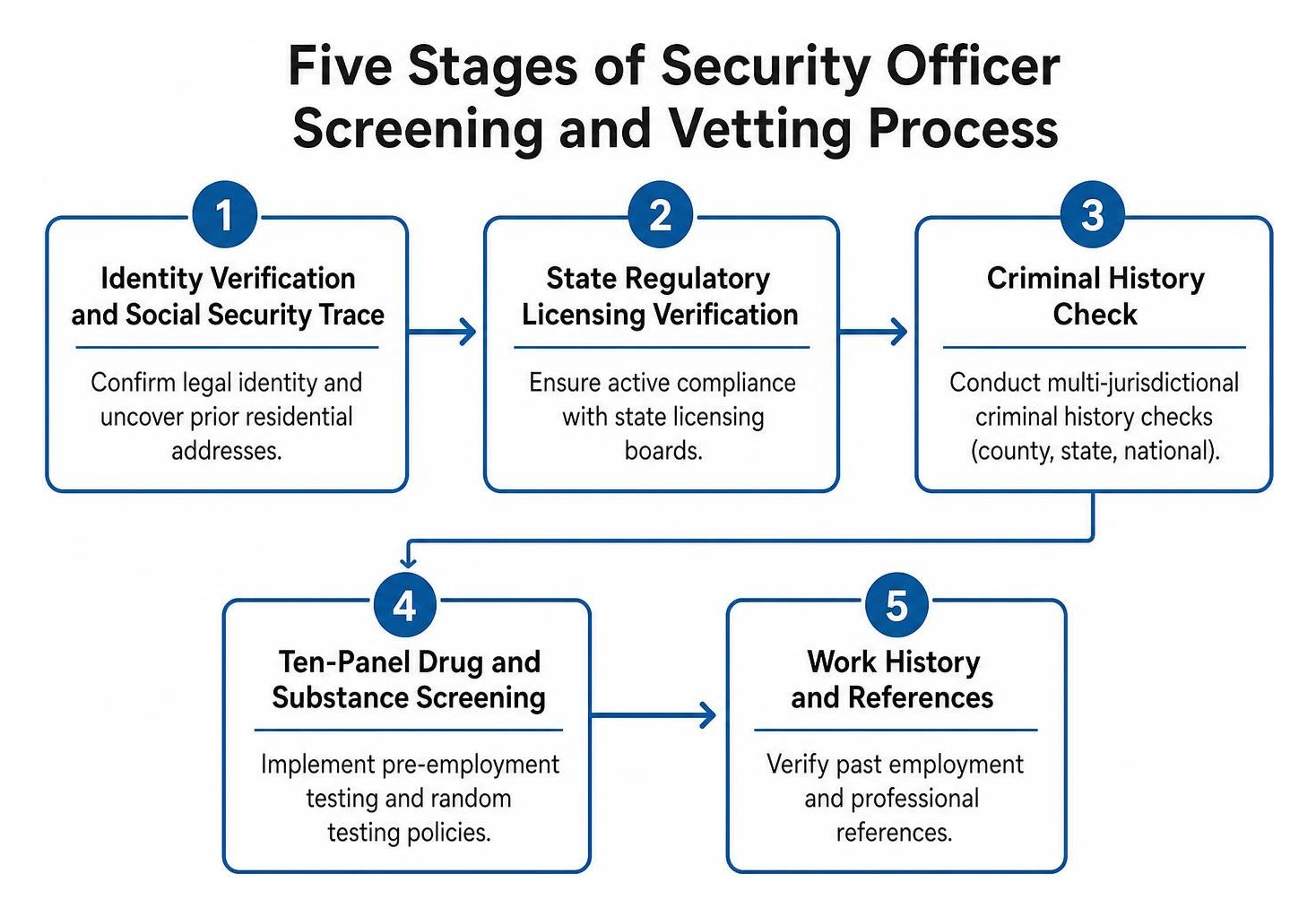
In addition to criminal record analysis, thorough screening protocols include:
- Identity Verification and Social Security Trace: Confirming legal identity and uncovering prior residential addresses to cross-reference jurisdictional court records.
- State Regulatory Licensing Verification: Ensuring active compliance with state licensing boards across jurisdictions such as Florida, Virginia, Maryland, Delaware, North Carolina, and Texas.
- Ten-Panel Drug and Substance Screening: Implementing pre-employment testing along with random testing policies to maintain alert and capable personnel.
- Employment History and Credential Audits: Verifying past employment, examining performance histories, and contacting references to evaluate reliability and workplace integrity.
Core Standards That Define Top-Rated Security Services in 2026
Modern physical security demands more than a passive presence. Security officers must master technical platforms, communicate clearly, and resolve tense interactions calmly. Reviewing The Ultimate Guide to Finding Trusted Security Service Providers reinforces how critical site-specific training is for commercial resilience.
Superior security programs combine several structural capabilities:
- Site-Specific Post Orders: Officers undergo training on property layouts, evacuation routes, mechanical shut-offs, and tenant rules before deployment.
- De-escalation Capabilities: Personnel use verbal mediation to de-escalate conflicts calmly and professionally without physical force.
- Customer Service and Access Administration: Lobby personnel balance strict credential validation with professional, welcoming front-desk management.
- Strong Supervisor Ratios: Dedicated field supervisors conduct routine and unannounced site inspections to support operational standards.
The Operational Value of Verified Background Checks in Security Consulting

Integrating background-checked officers into a facility forms the foundation of commercial security risk management. When managing corporate towers, medical centers, or logistics hubs, verified personnel ensure physical access points remain secure.
Security consulting models stress that physical personnel, electronic access management, and environmental design must reinforce one another. An unverified guard introduces a serious vulnerability into an otherwise well-designed access network. Verified background checks ensure staff members uphold operational integrity and maintain accurate digital records.
Mitigating Corporate Vulnerabilities and Internal Theft
Internal theft and unauthorized facility access cause major financial losses for commercial enterprises. Deploying thoroughly vetted 24 hour security guards directly helps maintain inventory security, secure sensitive server rooms, and support overall property values.
Properties with visible, professional security personnel deter illicit entry and policy violations. Officers monitor perimeters, manage loading dock deliveries, check vendor badges, and conduct continuous rounds. These measures ensure only authorized personnel enter private areas, keeping operational workflows safe and uninterrupted.
Incident Reporting, De-escalation, and Emergency Responsiveness
When emergencies arise, such as a facility power loss, water leak, or unauthorized intruder, an officer’s training and character are tested immediately. Background-checked personnel handle high-stress situations with composure and clear judgment.
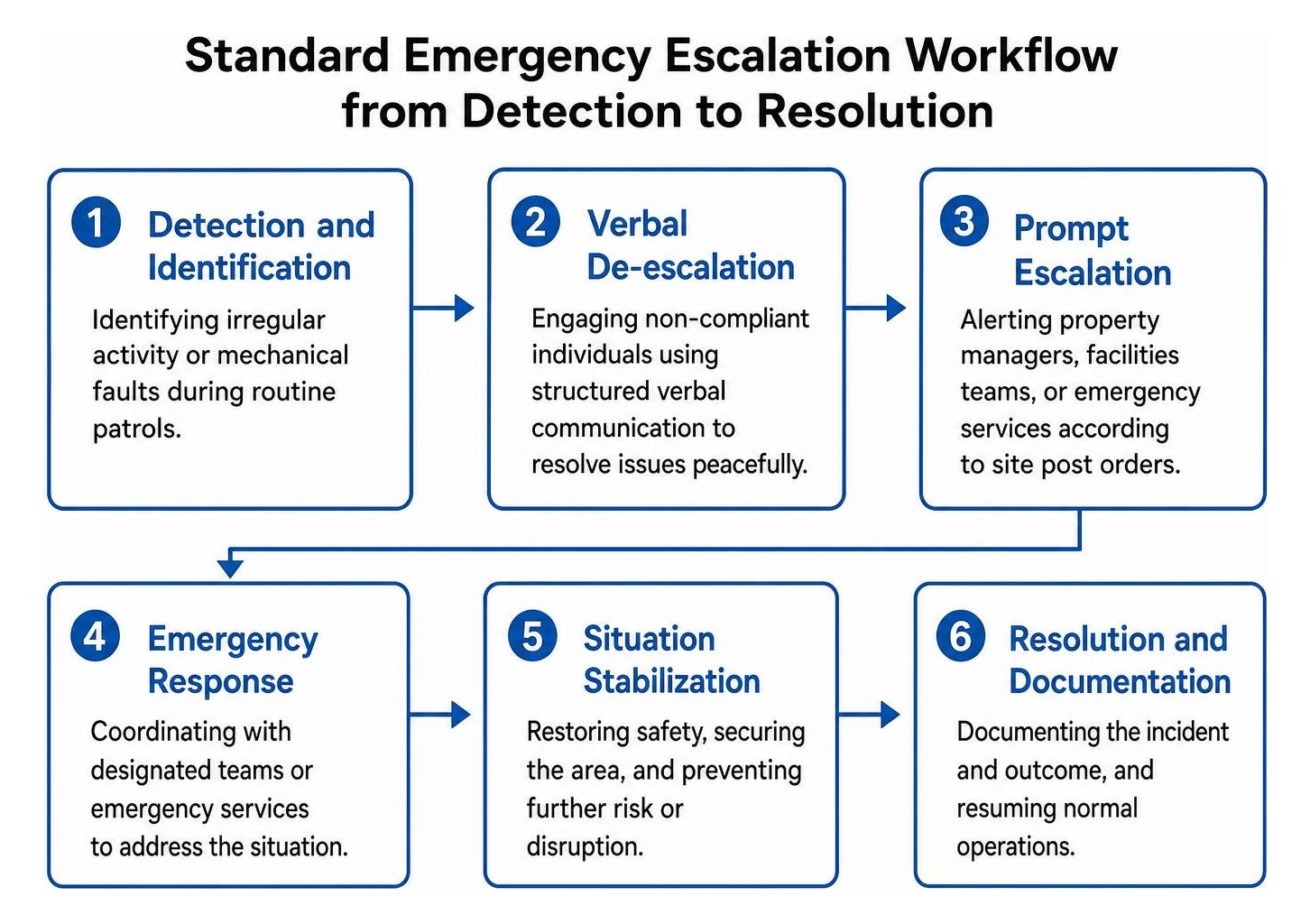
Professional incident management follows established procedures:
- Detection and Identification: Identifying irregular activity or mechanical faults during routine patrols.
- Verbal De-escalation: Engaging non-compliant individuals using structured verbal communication to resolve issues peacefully.
- Prompt Escalation: Alerting property managers, facilities teams, or emergency services according to site post orders.
- Digital Documentation: Submitting detailed incident reports, photos, and time-stamped digital logs before shift completion.
Key Criteria for Selecting Professional Security Personnel
Selecting a security services provider requires looking beyond basic hourly billing rates. Low-cost staffing models often cut corners on background screening, wage structures, and supervisory oversight, which leads to high turnover and poor site performance.
When evaluating potential security partners, procurement directors should review:
- Comprehensive Insurance Coverage: Confirming extensive general liability, workers’ compensation, and umbrella coverage limits.
- Accredited Training Programs: Reviewing modules on emergency response, access control software, verbal conflict resolution, and customer service.
- Regional Field Management: Verifying local supervisory presence in markets like Dallas, Miami, Orlando, Tampa, Baltimore, and Greensboro.
- Transparent Accountability: Reviewing incident response times, daily activity logs, and real-time electronic tour tracking data.
Comparing Vetted Guard Programs Against Unverified Staffing
| Evaluation Metric | Verified, Background-Checked Security Programs | Unverified Low-Cost Security Staffing |
|---|---|---|
| Screening Depth | Multi-state criminal, drug, license, and employment verification | Basic identity check with minimal background verification |
| Turnover Rate | Lower turnover supported by career progression and fair wages | High turnover resulting in unfamiliar personnel on site |
| Post Order Mastery | Comprehensive, site-specific orientation and emergency drill testing | Minimal training with generic on-the-job instructions |
| Technology Use | Real-time GPS guard tour systems and instant incident reporting | Manual paper logs with no real-time verification |
| Risk Reduction | Strong compliance that helps lower liability risks | Higher exposure to lapses, safety breaches, and negligence claims |
Digital Guard Tours, GPS Tracking, and Technology Integration
Modern physical security relies on verified personnel supported by modern technology. Top security providers deploy real-time digital guard tour solutions to ensure complete accountability.
Officers scan checkpoints, such as NFC tags or QR codes, at critical locations including stairwells, mechanical rooms, server facilities, and perimeter gates. These systems capture GPS coordinates and time stamps, transmitting data instantly to central management consoles.
For gated residential assets and multifamily properties, top rated security services for hotels and gated communities combine vehicle license plate logging, resident visitor management, and perimeter patrols to ensure thorough oversight across the property.
Frequently Asked Questions About Security Guard Screening
What does a comprehensive background check entail for corporate security officers?
A thorough screening process examines multiple sources to verify an applicant’s background and qualifications:
- Criminal History Records: Searching county, state, and national databases, along with federal district court records.
- State Security Licensing: Confirming active licenses and good standing with regional regulatory bodies.
- Five-to-Ten Year Employment Verification: Confirming previous employment dates, responsibilities, and performance history.
- Drug Screening: Conducting pre-employment drug panels and ongoing random screenings.
- Reference Checks: Contacting former supervisors to evaluate work ethic, punctuality, and reliability.
How do background-checked officers support facility safety without using weapons?
Unarmed, background-checked officers support facility safety through structured prevention, active access control, and verbal communication:
- Strict Access Control: Verifying visitor identities, issuing guest badges, and managing turnstile entry points.
- Visible Deterrent Patrols: Conducting regular foot patrols through corridors, parking structures, and exterior perimeters.
- Verbal De-escalation: Resolving disputes, managing trespassers, and calming disruptive individuals through clear verbal instructions.
- Early Hazard Detection: Identifying safety risks, including blocked fire exits, broken locks, or mechanical leaks, during routine patrols.
- Emergency Coordination: Assisting with building evacuations, meeting emergency responders at entrances, and providing situational briefings.
Why is rigorous vetting essential when hiring security officers for residential properties?
Residential communities, condominiums, and private estates require high vetting standards because officers interact closely with residents and their families. Security personnel frequently hold master keys, monitor vendor access, and review private resident directories.
Thorough screening ensures officers respect resident privacy, handle sensitive access codes responsibly, and maintain welcoming, professional gatehouse operations.
Conclusion
A successful physical security program relies on the integrity, training, and professionalism of its officers. While access control hardware and camera systems supply useful data, background-checked security personnel make critical decisions, resolve disputes, and maintain order across commercial facilities.
Admiral Security delivers comprehensive security solutions that unite background-checked officers, uniformed personnel, security risk management, and advanced technology integration. Our approach is built on responsiveness, client trust, and the Admiral Advantage, which combines authenticity, logic, and empathy. Working with thoroughly screened and well-managed security personnel ensures commercial properties remain secure, compliant, and smoothly run every day.