

Compare Security Services in Tampa With Confidence
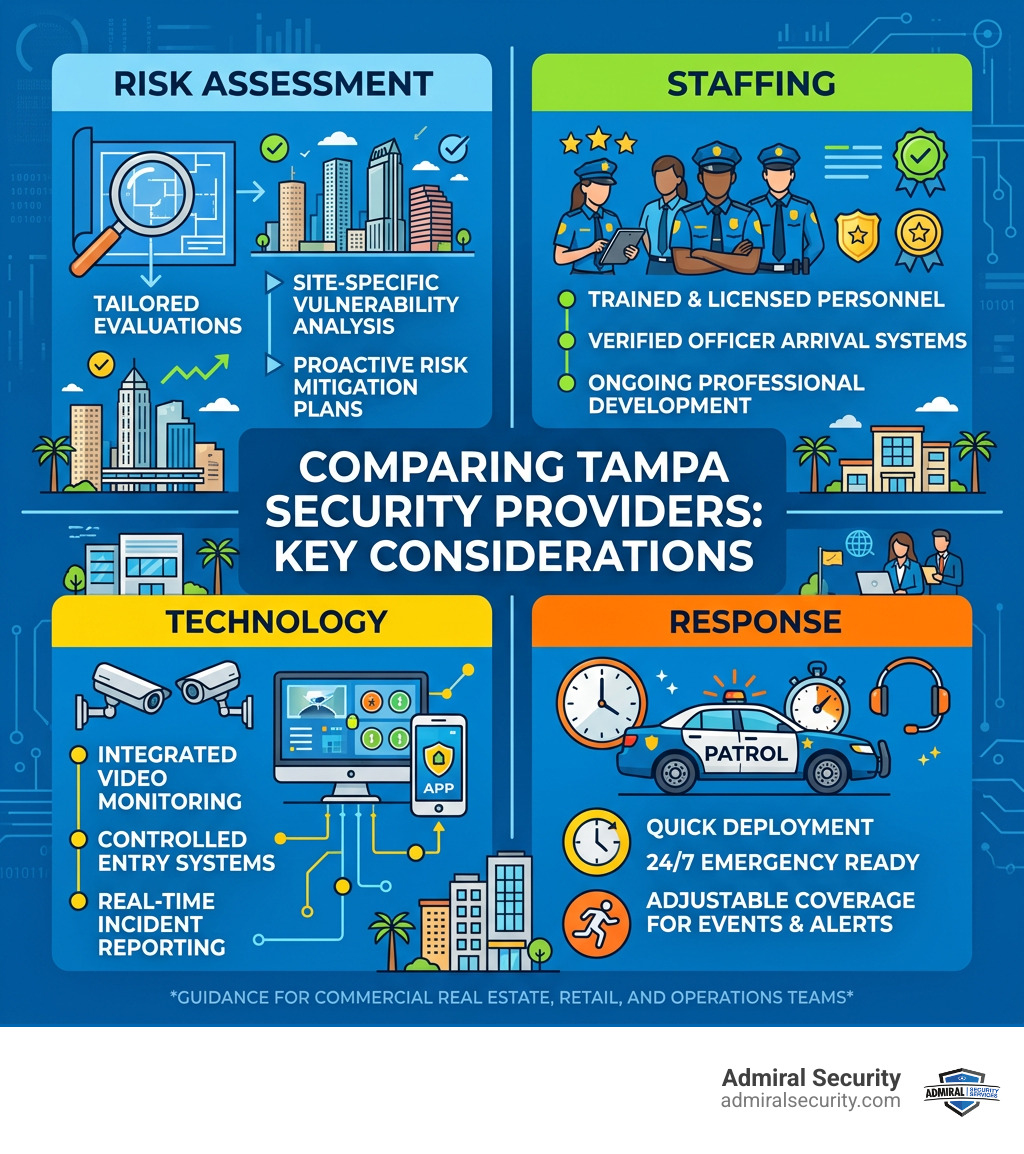
To compare security services in Tampa, start with your site’s risks, then match them to the right mix of on-site officers, mobile patrols, video monitoring, and access control. Ask each provider how it staffs shifts, verifies officer arrival, trains personnel, handles emergencies, and reports incidents.
For commercial real estate, retail, and operations teams, the best fit is rarely the lowest hourly rate. Look for a licensed provider that can represent your brand well, respond quickly, and adjust coverage for tenant activity, tourism crowds, severe weather, and after-hours risk.
Tampa businesses are investing more in cameras and controlled entry, but technology works best when trained people can assess alerts and act on them. This guide explains how to compare qualifications, coverage models, pricing, technology, and emergency readiness before signing a contract.
Comprehensive Security Services in Tampa: Industry Demand and Regional Risks
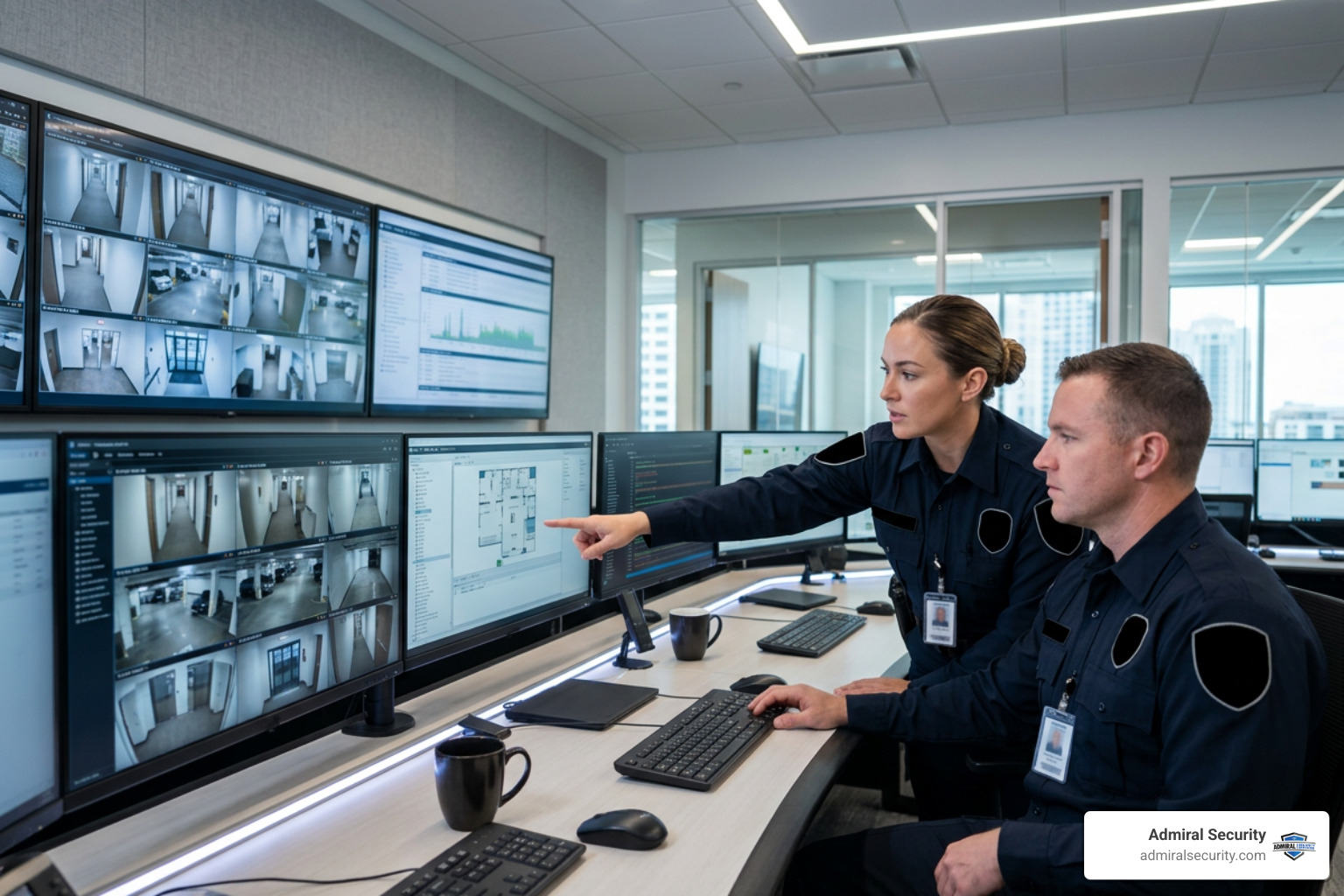
Managing property and operations across Hillsborough County requires an understanding of localized challenges. The security services market in Tampa is projected to grow at a CAGR of 6.2% from 2023 to 2028, driven by rising demand across commercial real estate, bustling hospitality venues, and expanding residential corridors. In fact, Tampa reported a 12% decrease in property crime rates in 2022, partly attributed to the adoption of advanced monitoring and on-site coverage by local businesses.
I always advise property managers to look at their unique geographic and operational profile. For example, high-traffic commercial real estate developments downtown demand exceptional visitor management, whereas sprawling corporate parks in nearby submarkets require comprehensive perimeter patrols. Exploring dedicated options for professional security guards in Tampa helps companies secure these varied environments effectively.

High-Risk Commercial and Tourism Sectors
Tampa thrives on energy, from historic nightlife spots in Ybor City to towering Class A office high-rises in Downtown Tampa and bustling retail centers in the Westshore business district. Each environment brings distinct challenges:
- Hospitality and Entertainment: Venues handling large crowds must balance proactive entry management with a welcoming customer service approach.
- Corporate and Commercial Real Estate: High-rise office towers require front-desk concierge staff who can verify credentials, manage vendor access, and maintain order during peak arrival hours.
- Retail Environments: Shopping centers frequently experience shoplifting and property disruption, requiring visible uniformed personnel for loss prevention.
- Special Events: Temporary festivals, conventions, and sports gatherings need scalable crowd management strategies that integrate seamlessly with venue staff.
Specialized Coverage for Port Tampa Bay and Regional Logistics
Logistics hubs and maritime facilities around Port Tampa Bay operate under strict federal and state regulatory frameworks. Facilities subject to Maritime Transportation Security Act (MTSA) standards require rigorous gatehouse validation, credential screening, and round-the-clock perimeter oversight.
Warehousing hubs across the I-4 corridor rely heavily on strict access management to maintain supply chain continuity and prevent unauthorized cargo access. Security teams in these locations focus on physical checkpoints, bill-of-lading verification, and detailed incident logging.
Armed vs. Unarmed Guard Services and Pricing Structures
Selecting the appropriate operational model depends directly on site risk profiles, budget allowances, and customer service goals. The average cost of a security guard service in Tampa typically ranges from $15 to $25 per hour, though specialized or armed profiles can command higher rates depending on experience, licensing, and equipment needs.
| Security Model | Average Hourly Rate | Typical Training Requirements | Best Suited For | Risk Deterrence Level |
|---|---|---|---|---|
| Unarmed Security Officer | $15 – $25 / hr | Florida Class D License (40 hrs), CPR/First Aid, De-escalation | Commercial offices, HOAs, retail, concierge desks | Moderate |
| Armed Security Officer | $25 – $40+ / hr | Florida Class D & Class G Licenses, Annual Firearms Qualification | Cash transit, high-value asset storage, critical infrastructure | High |
| Mobile Patrol Units | $20 – $35 / visit (or hourly route) | Class D License, Defensive Driving, Incident Reporting Software | Business parks, gated neighborhoods, construction sites | Moderate-High (Periodic) |
When to Choose Armed Security Services in Tampa
Armed coverage serves a very specific purpose. It is primarily reserved for environments involving high-value financial transit, banks, jewelry exchanges, critical energy infrastructure, or specialized VIP details.
In Florida, armed personnel must hold an active Statewide Firearm License (Class G) in addition to their standard Class D security license. This credential requires comprehensive classroom training, live-fire range qualification, and regular recertification. When companies evaluate armed coverage, they must verify that the provider enforces clear use-of-force policies, thorough background checks, and robust insurance policies.
Unarmed Officers and Mobile Patrol Coverage
For the vast majority of commercial properties, educational campuses, gated residential neighborhoods, and construction sites, unarmed officers offer an optimal blend of visibility and customer support.
Unarmed personnel focus on customer greeting, de-escalation, visitor screening, and continuous observation. When coupled with marked mobile patrol vehicles that perform randomized checks during overnight shifts, properties gain strong perimeter visibility and verifiable accountability without creating an overly intimidating atmosphere for visitors and residents.
Integrating Security Technology with Rapid Emergency Response
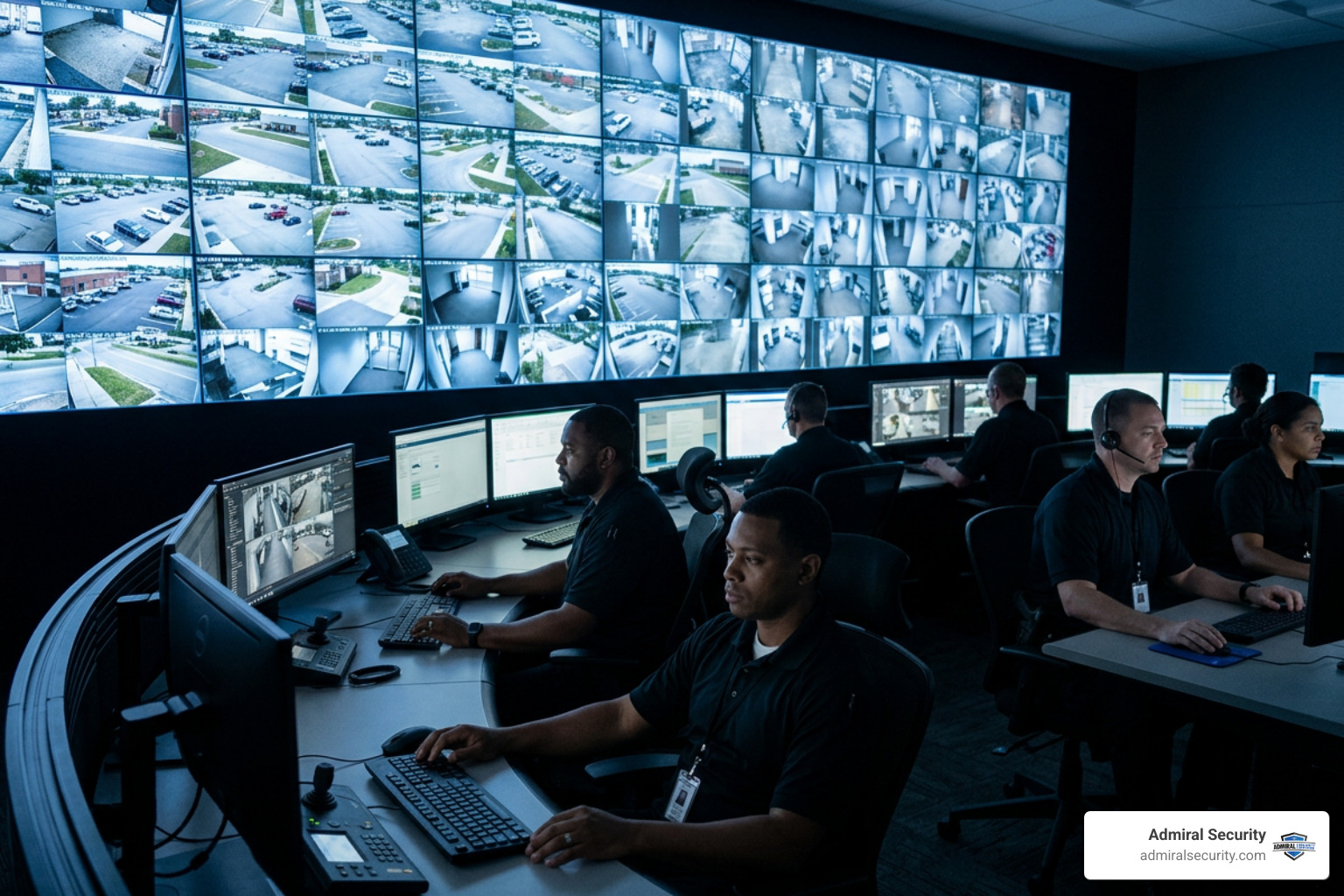
Human presence delivers maximum value when supported by modern physical security technology. Over 45% of Tampa-based small businesses have invested in video surveillance and access control systems in the past two years, and Tampa ranks among the top 20 U.S. cities for cybersecurity and tech-related job growth. Discovering modern strategies through trusted security resources and guides allows organizations to bridge the gap between human expertise and automated monitoring.
Surveillance Systems, Drones, and Access Control
Modern facilities increasingly rely on integrated platforms that connect smart cameras, cloud-based access control, and remote monitoring centers. Key technological components include:
- AI-Driven Video Analytics: Cameras that automatically flag perimeter breaches, loitering, or blocked emergency exits.
- Biometric and Mobile Access: Keyless entry systems that restrict sensitive areas while maintaining auditable access logs.
- Drone and Perimeter Sensors: Automated aerial sweeps and fence-line sensors that assist personnel in monitoring large logistics yards.
- Real-Time Guard Tracking: GPS-enabled handheld devices that verify patrol checkpoints and streamline incident reporting.
Crisis Management, Hurricane Protocols, and Law Enforcement Coordination
Tampa’s coastal location makes severe weather readiness essential. Professional security firms maintain structured business continuity plans for tropical storms and hurricanes, securing facilities before landfall and deploying post-storm officers to deter looting, monitor flood damage, and maintain generator perimeters.
Additionally, established providers maintain open channels with local agencies such as the Tampa Police Department and the Hillsborough County Sheriff’s Office. In the event of an active threat or medical emergency, trained officers provide critical on-the-ground communication, coordinate clear access for first responders, and manage orderly evacuations.
Compliance, Licensing, and Selecting the Right Security Partner
Florida maintains clear standards for private security providers under Chapter 493 of the Florida Statutes, administered by the Florida Department of Agriculture and Consumer Services (FDACS). When vetting potential vendors, verify every credential directly to ensure full regulatory compliance. Independent directory platforms like independent consumer security reviews can provide additional perspective on service reputations.
- Class B Agency License: Confirms the security company is legally authorized to operate in Florida.
- Class D Security Officer License: Verifies each individual guard has completed the mandatory 40-hour state training course.
- Comprehensive Liability Insurance: Look for general liability coverage (typically at least $1,000,000 to $5,000,000) and full workers’ compensation policies.
- Standardized Background Checks: Comprehensive state and federal fingerprint screenings for all personnel.
- Transparent Supervision Structure: Dedicated field managers who conduct unannounced site audits to maintain service standards.
Florida State Licensing and Legal Regulations
Under Florida Chapter 493, operating an unlicensed security agency or working as an unlicensed guard is a first-degree misdemeanor. Partnering with fully compliant vendors shields property owners from severe vicarious liability risks. Ensure your vendor tracks license expiration dates systematically and adheres to state guidelines regarding uniform badging and marked patrol vehicle signage.
Key Criteria for Vetting Security Services in Tampa
When reviewing vendor proposals, look beyond hourly billing rates and ask targeted questions:
- How do you manage short-notice shift call-outs and relief coverage?
- What specific customer service and conflict de-escalation training do officers receive?
- What is your ratio of field supervisors to line officers in the Tampa Bay market?
- Can you provide case studies or client references from similar facilities in the area?
- How quickly can your team scale coverage up or down based on seasonal demands?
Frequently Asked Questions About Tampa Security Solutions
What is the average hourly cost for security services in Tampa?
Standard unarmed security guard rates generally run between $15 and $25 per hour, while armed personnel, specialized maritime guards, or short-term event security can range from $25 to $45 or more per hour. Final costs depend on contract duration, risk factors, specialized technology integration, and supervisor oversight levels.
How do Tampa security companies maintain operations during hurricanes?
Reputable companies develop detailed disaster contingency plans well before hurricane season. These include pre-storm facility lockdowns, distributed communication systems, mobile command units, and priority post-storm relief teams deployed as soon as local authorities declare roads safe for travel.
Are security guards in Tampa legally permitted to detain trespassers?
Security officers in Florida do not possess law enforcement powers. They operate under property owner authorization to enforce site rules, request unauthorized individuals to leave, and execute citizen detentions only under narrow legal circumstances involving clear felonies or direct threats to life. In typical trespassing cases, officers instruct the person to depart and coordinate directly with local law enforcement if non-compliance occurs.
Conclusion
Securing commercial assets, residents, and visitors across the Tampa Bay area requires a thoughtful combination of trained personnel, smart technology integration, and clear emergency response planning. By identifying your exact site vulnerabilities, verifying state licenses, and insisting on responsive field management, you can establish an environment that supports business continuity and long-term peace of mind.
At Admiral Security, we deliver tailored security strategies anchored by our core philosophy of authenticity, logic, and empathy. Whether you oversee a corporate high-rise, a retail center, or a logistics yard, our teams provide the vigilance and professionalism your property demands. Explore our extensive network across Admiral Security regional service locations to connect with our regional leadership and elevate your security program today.