

Core Categories of Security Training Programs
Comparing security training options starts with four operational categories: workforce awareness, physical site security, defensive operations, and offensive penetration testing. Workforce awareness builds everyday digital hygiene for all employees. Physical site security covers access control, de-escalation, and emergency response for on-site personnel. Defensive operations prepare technical teams to detect and contain live incidents. Offensive penetration testing trains security engineers to find and close exploitable gaps before adversaries do. Selecting the right mix depends on each team’s daily responsibilities and the specific risks your facilities face.
When evaluating your organizational defense strategy in 2026, you quickly realize that risk does not live in a single silo. Human error accounts for 95% of breaches, and roughly 60% of small and mid-sized businesses fail within six months of suffering a severe compromise. Because modern threats bypass traditional perimeters through both digital deception and physical unauthorized entry, building a resilient operation requires aligning your learning tracks with specific operational responsibilities.
| Training Track | Primary Audience | Core Curriculum Focus | Delivery & Practice Format | Verification & Compliance |
|---|---|---|---|---|
| Workforce Awareness | All corporate employees, non-technical staff, remote workers | Phishing, credential security, data privacy, clean desk rules | Self-paced modules, interactive micro-learning, simulated quizzes | 80% quiz benchmarks, MA Data Security Law, HIPAA tracking |
| Physical Security & Guard Licensing | On-site officers, facility directors, concierge teams | Access control, de-escalation, conflict resolution, site egress | Classroom instruction, scenario walk-throughs, practical drills | State regulatory certificates, practical competency reviews |
| Technical & Defensive Operations | SOC analysts, systems administrators, incident responders | Network forensics, SIEM querying, log triage, threat hunting | Hands-on virtual labs, active defense exercises, capstone CTFs | GIAC credentials (GCIH, GSOC), CPE credits, audit logs |
| Offensive & Penetration Testing | Security engineers, penetration testers, red teamers | Exploit frameworks, Active Directory abuse, cloud pivoting | Live-fire capture-the-flag (CTF) events, sandbox environments | Industry certs (GPEN), penetration test report submissions |
Role-Based Security Training for Non-Technical Personnel
Everyday staff members are often targeted first through credential theft, phone scams, and deceptive email links. For non-technical personnel across corporate offices, legal teams, and human resources, instruction should demystify technical jargon and emphasize real-world digital hygiene.
A structured curriculum introduces workforce concepts such as personally identifiable information (PII) handling, safe handling of sensitive customer records, secure public Wi-Fi habits, and mobile device hygiene. It should also reinforce physical workspace expectations, including clean desk protocols and locking unattended workstations. Practical initiatives like comprehensive safety and security training help personnel understand their specific role during unplanned site disruptions, ensuring a cohesive response across the entire organization.
These programs also directly support legal and regulatory obligations. Whether satisfying Massachusetts Data Security Law (201 CMR 17.00), HIPAA guidelines for healthcare data, or industry standards like PCI-DSS, structured modules establish an auditable record of workforce education. In distributed workforces, specialized remote work guidance helps personnel maintain secure home network baselines, identify social engineering attempts, and report suspicious activities immediately.
Physical Guard Licensing and Site Defense Training
Physical security remains the first line of defense for commercial office buildings, industrial sites, healthcare centers, and retail spaces. On-site officers must possess strong situational awareness, clear communication skills, and sound judgment under stress.
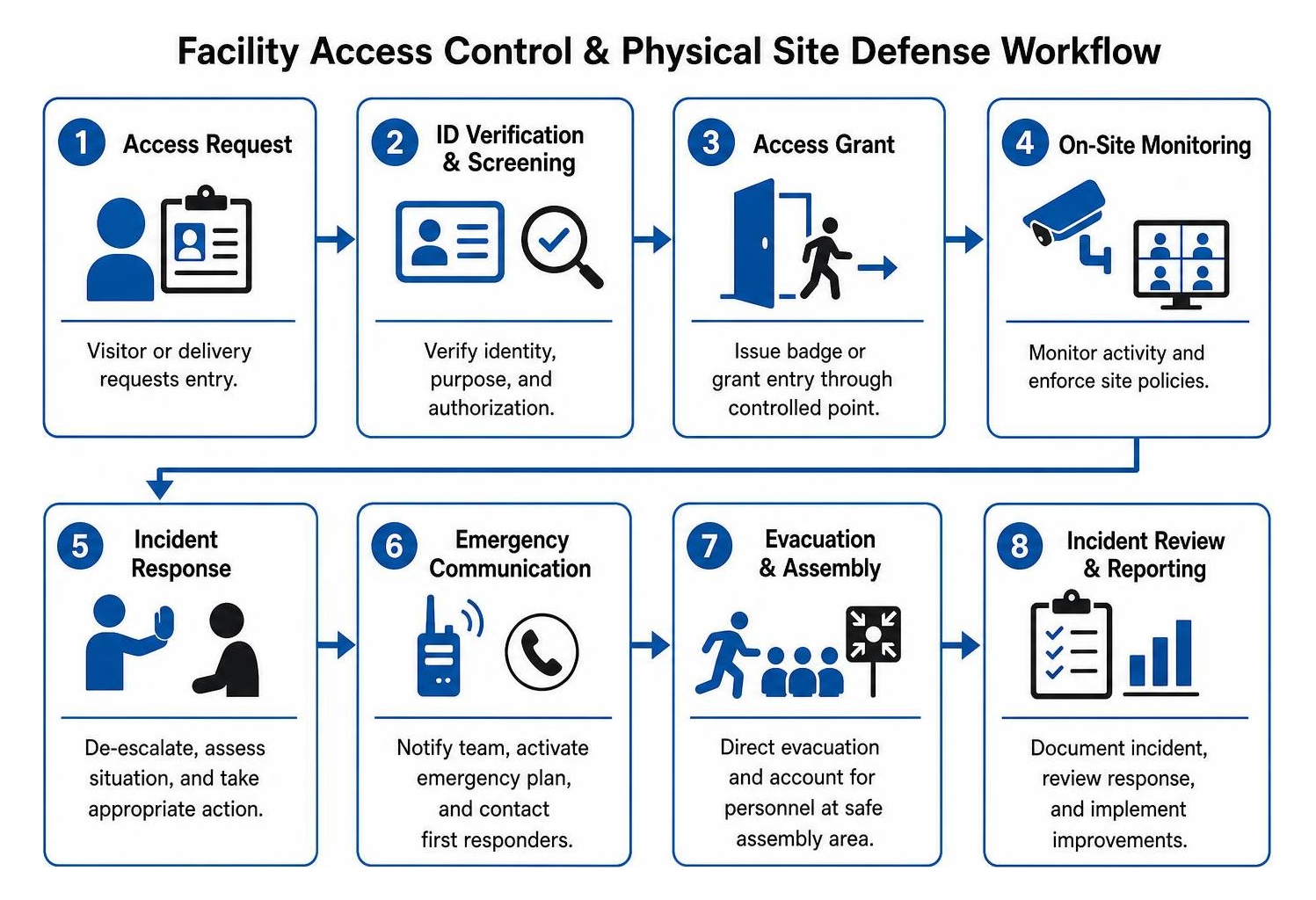
Core physical defense training focuses on strict access control management, visitor logging, emergency communication, and crisis mitigation. Understanding specific certified security guard licensing requirements ensures all personnel meet mandatory state hours and regulatory criteria across jurisdictions from Virginia to Florida.
Beyond baseline licensing, modern facilities prioritize customer-centric conflict resolution. Equipping team members with de-escalation training for on-site personnel minimizes verbal friction, reduces physical liability, and maintains a welcoming environment for tenants and visitors. When coordinated alongside structured emergency evacuation planning, on-site teams can efficiently direct building evacuations, manage safe assembly areas, and coordinate with local first responders during critical incidents.
Advanced Technical and Offensive Security Training
Technical personnel require deep, practical skill sets to combat sophisticated adversaries targeting enterprise infrastructure. Foundational curricula like SEC301: Introduction to Cyber Security bridge the communication gap between business managers and technical teams by framing security concepts around the classic risk equation: Threat times Vulnerability times Impact.
For technical teams tasked with defensive operations, SEC504: Hacker Tools, Techniques, and Incident Handling offers an attacker-mindset approach to incident handling. Trainees learn to identify unauthorized network scans, investigate live system intrusions using modern command-line utilities, dissect memory artifacts, and apply the Dynamic Approach to Incident Response (DAIR) framework.
To evaluate overall enterprise resilience, specialized courses like SEC560: Enterprise Penetration Testing instruct security professionals on how to conduct full-scope penetration assessments. This includes Active Directory reconnaissance with tools like BloodHound, Kerberoasting attacks, lateral movement techniques, and Azure cloud role abuse. Specialized technical training can also extend into deep mobile analysis, such as Offensive Mobile Reversing and Exploitation, where engineers learn to dissect iOS and Android binaries, understand ARM64 architecture, and execute runtime analysis using instrumentation tools like Frida.
Key Evaluation Factors: Delivery Formats, Labs, and Technical Requirements
Selecting the right program requires looking past slide decks and marketing promises. How material is delivered directly determines whether employees retain actionable habits or immediately forget what they watched.
Hands-On Labs vs. Traditional Lecture Formats
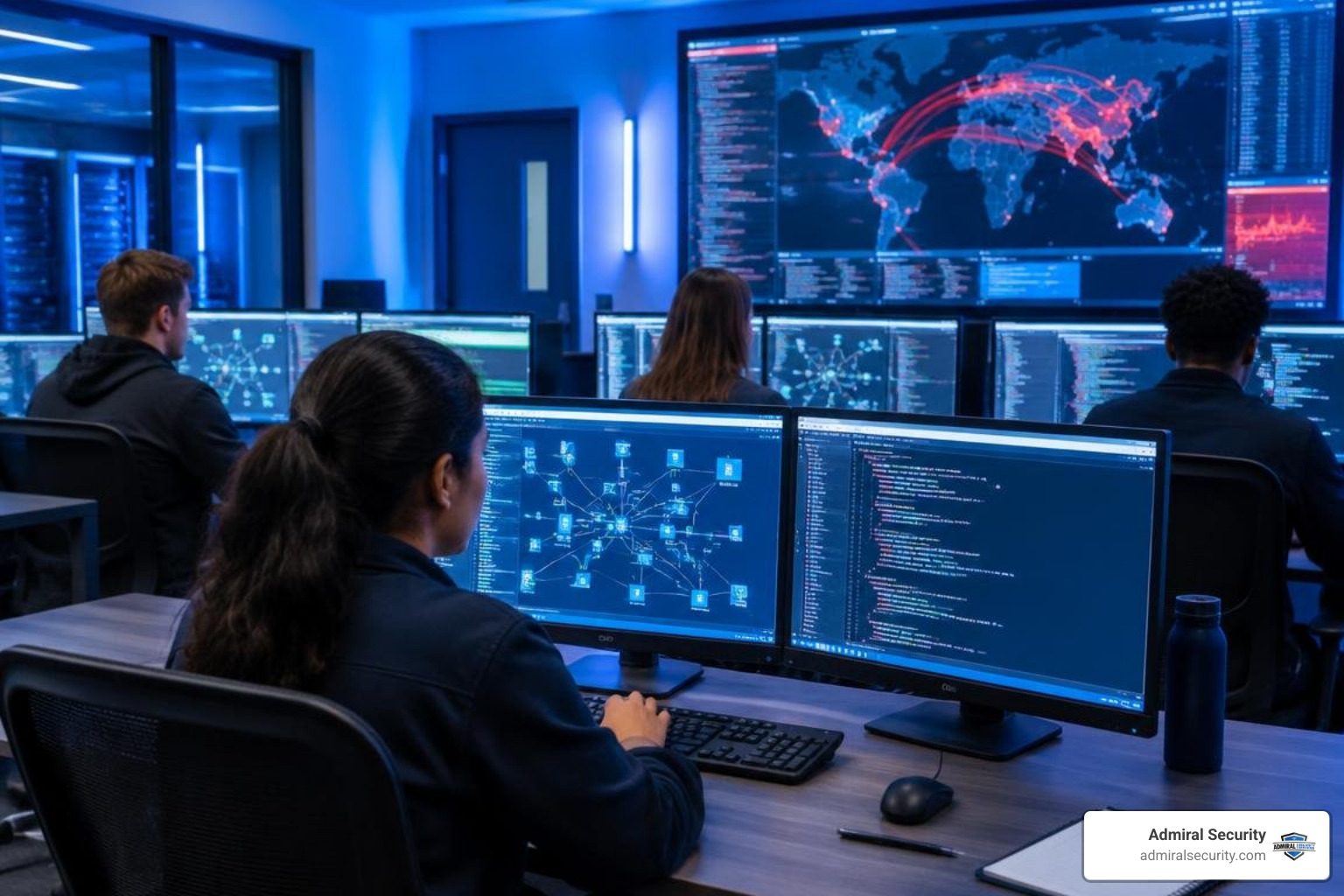
Passive, lecture-only training often fails to build real competence. When a critical incident occurs, teams rely on practiced muscle memory rather than remembered slide decks. Modern technical courses address this by prioritizing interactive, lab-based environments.
Practical labs place learners inside live networks, virtual environments, and capture-the-flag (CTF) challenges that simulate actual attacks. In these sandboxes, defenders analyze real packet captures, identify indicators of compromise, and tune intrusion detection rules. This hands-on experience mirrors practical cybersecurity disaster recovery strategies, where documented response plans are pressure-tested before a live crisis unfolds.
Hardware Prerequisites, AI Tooling, and Course Accessibility
Advanced technical labs require adequate hardware to run complex local environments smoothly. Typical requirements include laptops with at least 16 GB to 32 GB of RAM, modern multi-core processors supporting hardware virtualization, and substantial free solid-state storage to accommodate multiple virtual machine snapshots.
Modern technical curricula also directly integrate artificial intelligence tools into their exercises. Learners study how generative AI can accelerate incident triage, deobfuscate malicious scripts, and generate automated detection rules. Simultaneously, courses introduce methods to defend against emerging AI vectors, such as prompt injection and automated credential-stuffing campaigns. For broader IT teams seeking a comprehensive baseline across on-premises, cloud, and container systems, SEC401: Security Essentials serves as a broad foundation covering enterprise architecture and defense-in-depth principles.
Certification Pathways, Career Progression, and Return on Investment
Formal security certifications establish clear benchmarks for professional competence, helping organizations validate skill sets and plan meaningful career progression.
| Certification / Program | Target Role | Key Competencies Validated | Prerequisites & Format | Typical Career Impact |
|---|---|---|---|---|
| GISF (GIAC Information Security Fundamentals) | Non-technical managers, IT auditors, compliance leads | Foundational security concepts, cryptography basics, risk framing | Basic computer literacy; 30-hour course or self-paced | Bridges the gap between business operations and technical security teams |
| GSEC (GIAC Security Essentials) | Systems administrators, junior security engineers | Network architecture, cloud baseline security, identity systems | IT administration background; 46-hour intensive lab curriculum | Validates hands-on technical readiness across hybrid environments |
| GCIH (GIAC Certified Incident Handler) | Incident responders, SOC analysts, threat handlers | Live system forensics, attack tool analysis, incident mitigation | Fundamental networking and OS concepts; 38-hour lab coursework | Core qualification for tier-2/tier-3 SOC analyst roles |
| GPEN (GIAC Penetration Tester) | Penetration testers, vulnerability analysts | Network exploitation, Active Directory privilege escalation | Intermediate networking and scripting skills; 36-hour lab curriculum | Industry benchmark for professional penetration testing roles |
| Workforce Awareness Certificate | General workforce, remote staff, corporate teams | Phishing detection, credential hygiene, data privacy protocols | None; modular 1-hour courses with annual renewals | Meets compliance standards and reduces human-error breach risks |
Industry Certifications and Career Progression Pathways
Structured credentials provide a reliable path for professionals advancing into cybersecurity and security risk management roles. Non-technical staff and business leaders often begin with the GISF credential to gain a working vocabulary in digital risk.
From there, security professionals frequently advance into defensive security operations. Enrolling in SEC450: SOC Analyst Training – Applied Skills for Cyber Defense Operations prepares defenders for the GIAC Certified SOC Analyst (GSOC) credential. This curriculum covers SIEM query design, telemetry analysis, and automation via playbooks, while also addressing operational workload balance and alert fatigue management. As professionals progress, they can pursue specialized offensive certifications like the GPEN or defensive credentials like the GCIH to lead enterprise incident handling efforts.
Cost Structures, Pricing Models, and Effectiveness Metrics
Security education programs employ distinct pricing models based on target audience and depth:
- Workforce Awareness Subscriptions: Generally billed as per-employee annual or monthly subscriptions. Typical SMB plans average approximately $100 per month for up to 100 users, delivering modular digital courses, phishing simulations, and compliance tracking reports.
- On-Site Guard Licensing Programs: Priced per student, covering state-mandated training hours, classroom instruction, and practical examination processing.
- Advanced Technical & Professional Certifications: Delivered as comprehensive multi-day boot camps or self-paced video series, ranging from $4,000 to over $8,500 per seat, with certification exam attempts billed separately or bundled.
To assess return on investment, organizations track concrete performance metrics. Awareness programs typically require an 80% passing threshold on practical quizzes, paired with measurable reductions in phishing simulation click rates. For technical and physical teams, success is measured by faster incident triage times, thorough compliance audit documentation, and confident operational readiness during unexpected facility disruptions.
Frequently Asked Questions
How do organizations measure the real-world effectiveness of employee awareness programs?
Organizations measure awareness effectiveness through unannounced phishing simulations, periodic knowledge checks with an 80% passing threshold, and employee reporting frequency. Tracking how quickly staff report suspicious communications provides far more actionable insight into organizational safety than simply logging course completion dates.
What are the standard hardware prerequisites for advanced lab-based courses?
Advanced technical courses typically require a 64-bit laptop with at least 16 GB to 32 GB of RAM, a modern multi-core processor (Intel Core i7/i9 or Apple Silicon), and at least 50 GB to 100 GB of free solid-state drive storage. Machines must support hardware virtualization to run nested virtual machines and dedicated offensive or defensive toolsets smoothly.
How do modern courses address emerging AI and cloud threats?
Modern curricula incorporate hands-on modules focusing on cloud identity systems, Azure and AWS access misconfigurations, and container runtime vulnerabilities. They also explore defensive AI applications for automated alert triage while training teams to identify emerging threats like prompt injection and automated credential harvesting.
Conclusion
Building a resilient enterprise requires a cohesive, multi-layered approach that integrates physical site safety with sound digital practices. By combining routine workforce awareness, certified on-site security personnel, and specialized technical response training, organizations can successfully lower operational risk and maintain compliance across all facilities. For an in-depth review of tailored instructional programs, explore our definitive security training services guide to discover how Admiral Security delivers trusted, responsive, and people-first solutions for your organization.